Solving Shadow AI: How Data Gateways Fix Broken AI Compliance
Table of Contents
Key Takeaways
- According to the 2026 Microsoft Data Compliance Index, 58% of enterprise employees use personal AI credentials to process work documents.
- Shadow AI refers to the unauthorized use of AI tools by employees without IT oversight.
- LLM Capsule, developed by CUBIG, provides a reversible data layer that ensures strict AI compliance while keeping original data fully in-house.
Forty-two percent of US enterprises abandoned their major AI initiatives this year. S&P Global reported this high failure rate in early 2025. Data availability remains the primary hurdle for corporate boards demanding tangible returns on their technology investments. Teams cannot use external models because compliance policies forbid uploading corporate context to third-party servers.
Shadow AI prevention tactics often backfire entirely. Employees simply bypass official channels to hit their deadlines. They paste sensitive financial tables directly into consumer ChatGPT accounts.
Your data governance strategy must evolve past simple restriction. CUBIG built LLM Capsule to solve this exact tension between productivity and policy. Here is how modern data gateways replace broken red-tape protocols with profitable execution layers.
The Shadow AI Epidemic on the Ground
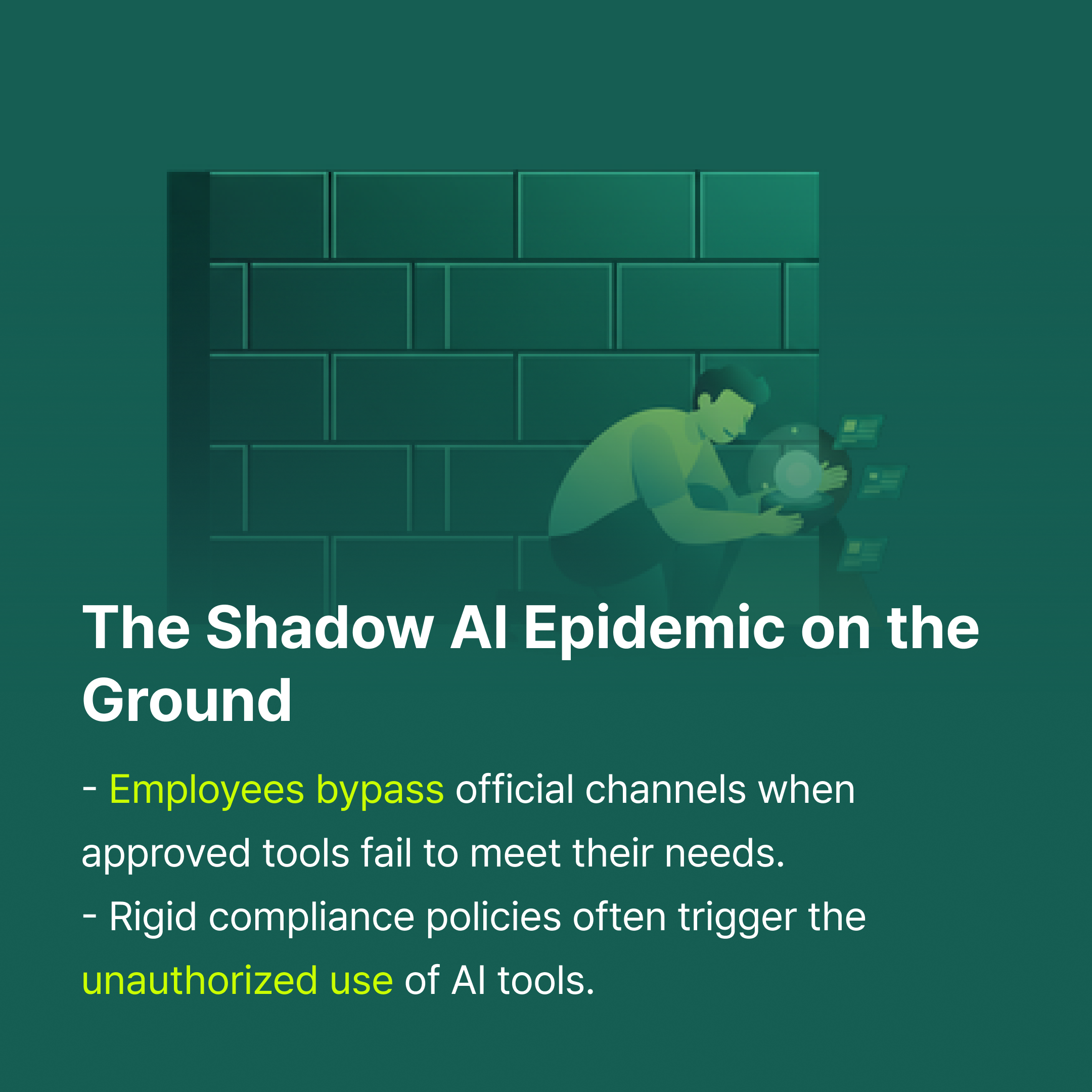
Employees bypass official software channels when approved tools fail to do the job. Shadow AI refers to the unauthorized use of AI tools by employees without IT oversight. Rigid policies designed to enforce AI compliance usually trigger this behavior. Business units have quotas to meet.
When we evaluated usage patterns last year, the results shocked our procurement team. Data engineers were routinely scrubbing dataset samples manually just to get coding help from external models. This manual scrubbing process wastes expensive engineering hours. It also introduces significant human error into the data pipeline. Governance teams lose all visibility the moment a worker opens an unapproved browser tab.
Sixty percent of AI projects will halt by 2026 due to a lack of AI-optimized data. Gartner published this forecast based on current enterprise readiness scores. Teams cannot train effective models on redacted gibberish. They need rich corporate context to generate accurate business insights.
Does this sound familiar to your operations team? We see this pattern across every Fortune 500 company we audit. Data stays trapped in legacy systems while competitors move faster.
Why Are Traditional Governance Frameworks Failing?
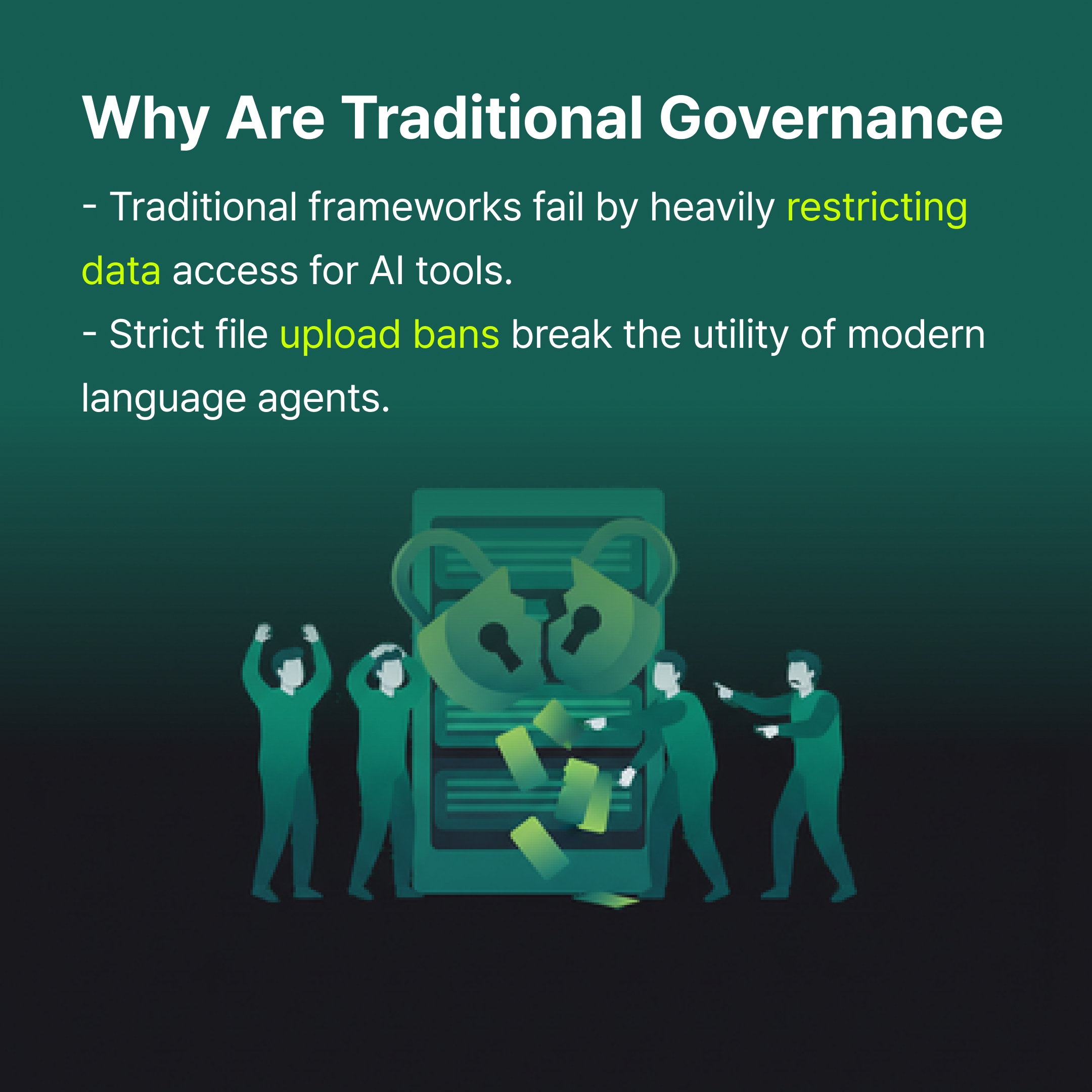
Traditional data governance frameworks fail because they rely on restricting access rather than workflow enablement. Employees face strict bans on uploading files to external models. These bans completely break the utility of modern language agents. Modern platforms like CUBIG’s LLM Capsule take a different approach. They enable safe adoption through reversible data capsulation rather than outright bans.
VentureBeat research confirms that organizations modernizing their data and systems are in a far stronger position to enable AI at scale. Legacy data governance tools simply delete words from documents. A contract missing all names, dates, and currency values becomes entirely useless to a legal review agent. The model loses the semantic relationships required to map clauses together.
Compliance teams often act as a wall instead of a bridge. They demand absolute zero-risk environments. This stance forces developers into the frustrating cycle of building expensive internal models that lag years behind frontier models.
The Broken Context Problem in Practitioner Workflows
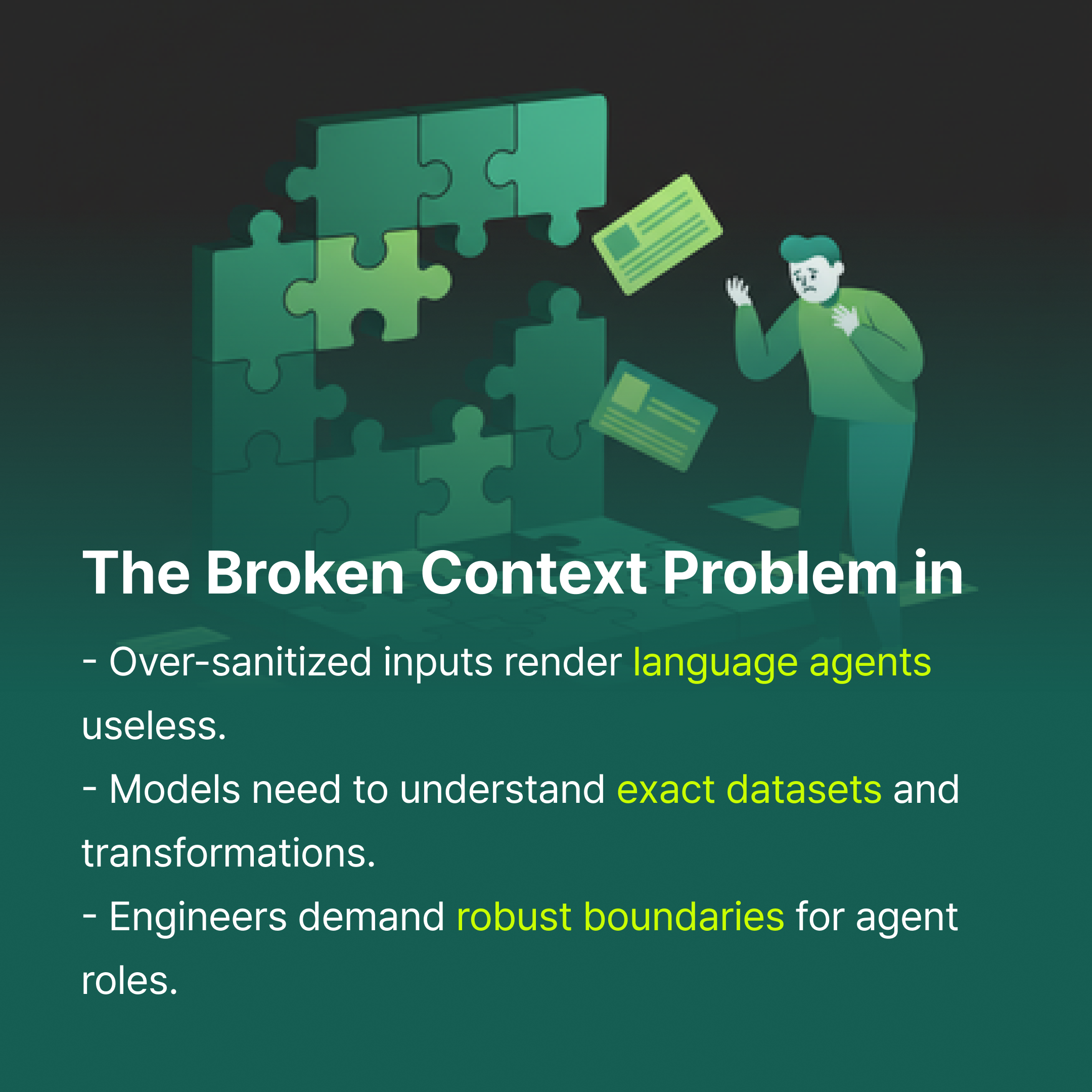
Data engineers openly discuss the futility of over-sanitized inputs on industry forums. One top contributor on the Reddit data engineering community stated plainly that if Claude cannot understand your datasets, transformations, and dependencies, it cannot help. Practitioners fear giving autonomous agents direct access to production databases. They demand robust boundaries and read-only roles.
You cannot treat language models like simple application programming interfaces. Models require deep relational context to function. When governance teams strip away this context, they destroy the ROI of the entire project.
Academic studies highlight the failure of traditional redaction techniques in Retrieval-Augmented Generation systems. Semantic destruction occurs when documents fill up with redaction tags. The computational reasoning of the model drops to near zero. Researchers focus entirely on format-preserving tokenization to solve this mathematical breakdown.
What Does True AI Compliance Look Like for Agentic Workflows?
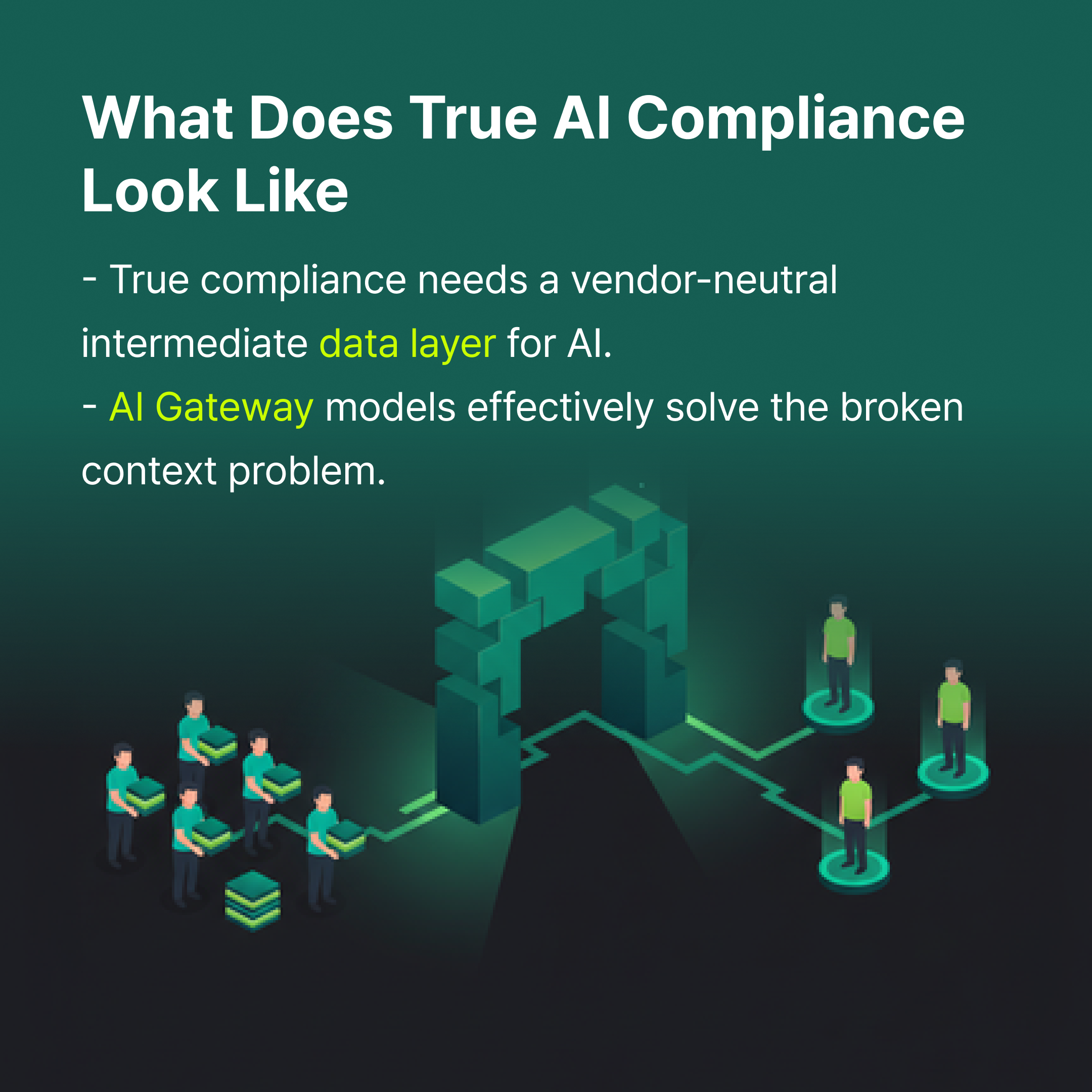
True AI compliance for agentic workflows requires a vendor-neutral data layer that capsulates sensitive enterprise context without breaking semantic relationships. Agents need this intermediary layer to execute complex tasks safely. Traditional identity frameworks break down when agents string together multiple software actions autonomously.
To solve this broken context, one architecture becoming increasingly popular is the AI Gateway model. CUBIG’s implementation utilizes a process called Rehydration Restoration. The AI processes safe surrogate data. Final responses then automatically return to the user with the original accurate data intact. Unlike traditional redaction which returns blank spaces, LLM Capsule’s Rehydration Restoration automatically restores original data in AI responses.
McKinsey notes that addressing agentic systems starts with upgrading existing identity and access management policies. An AI data gateway serves exactly this function for unstructured documents. It maintains the mathematical structure the AI needs while fulfilling strict privacy obligations.
Beyond Basic Capsulation to Format Preservation
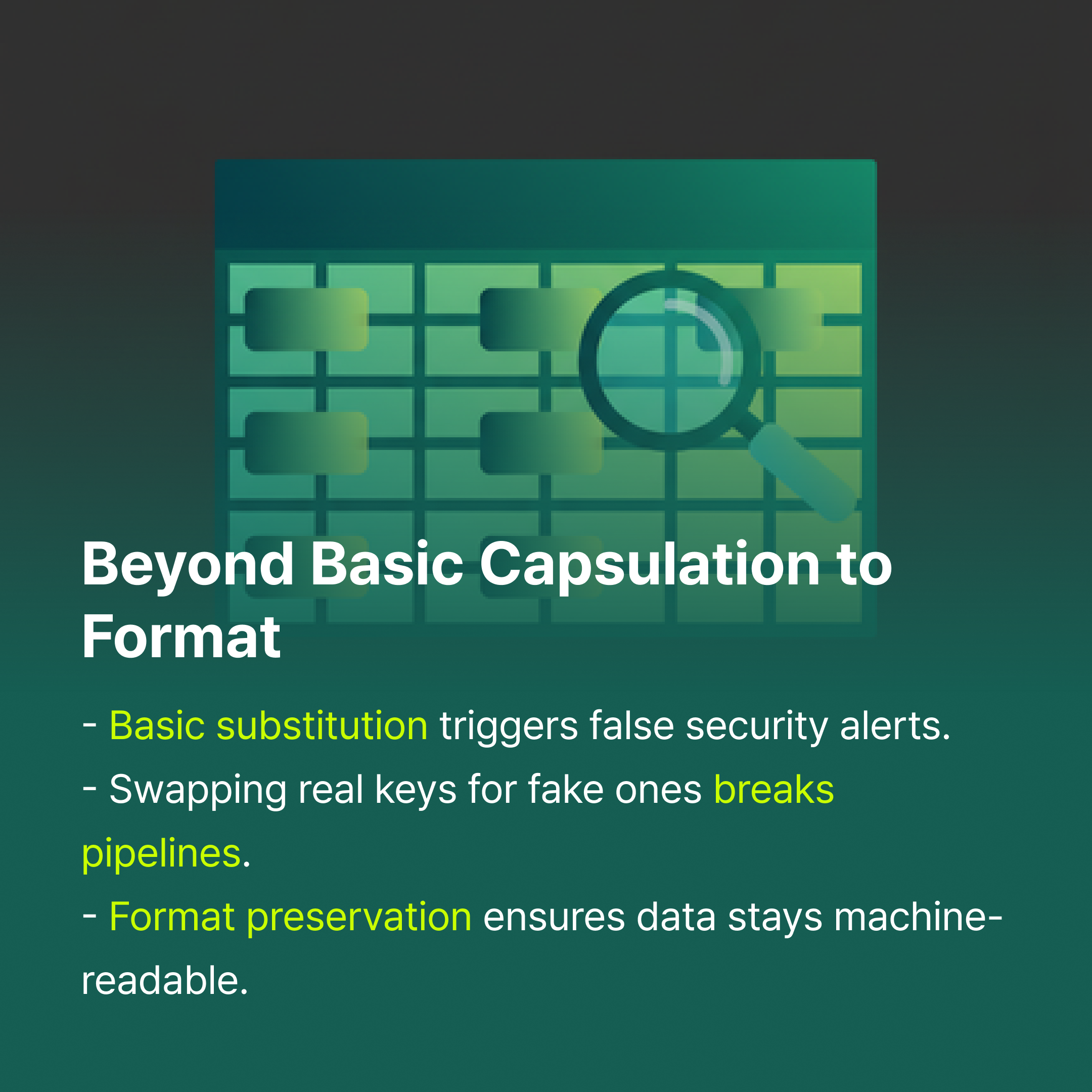
Basic substitution techniques trigger false positives in downstream enterprise scanning tools. Hacker News users frequently document how swapping real API keys for fake ones breaks their deployment pipelines. Structure-preserving processing solves this headache entirely.
Unlike Nightfall AI or Cloudflare AI Gateway, true format preservation ensures your complex spreadsheets and contracts remain readable by the machine. A date format stays a date format. A nine-digit numerical string retains its column integrity. The model digests the structural logic without ever seeing the actual proprietary values.
Forrester research regarding “agentic AI data governance” shows that success depends heavily on validation and downstream impact. Complex enterprises prioritize these structural governance layers over raw execution speed.
Are you governing trade secrets or just standard personally identifiable information? Enterprise context control lets you define sensitivity on your own terms. Your product roadmaps and internal pricing tables require the exact same handling as a social compliance number.
How Can Organizations Implement an Enterprise AI Data Gateway?
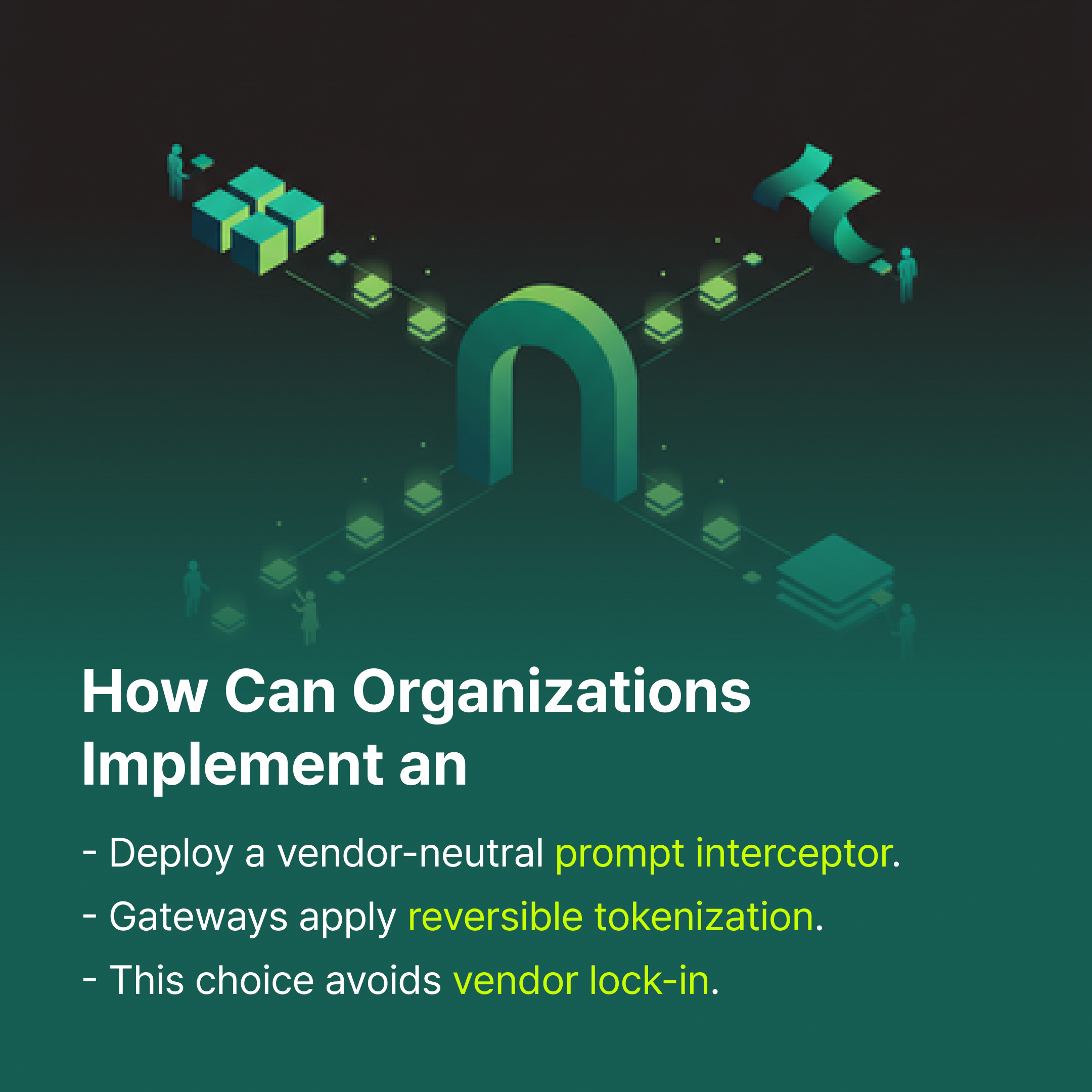
Organizations implement an enterprise AI data gateway by deploying a vendor-neutral layer across all their AI model boundaries. This layer intercepts outgoing prompts and applies reversible tokenization to sensitive terms. It then passes the structurally intact data to external models safely.
Your team avoids vendor lock-in completely with this architectural choice. Cross-model execution allows developers to route traffic to Gemini today and Claude tomorrow. The governance rules remain centralized in one manageable location.
Seek Blog reported that Swiss Life unified ownership and improved data lineage by adopting a third-party governance platform. A centralized AI data gateway replicates this success for unstructured document flows. It provides the audit logs compliance officers require before signing off on production deployments.
Shadow AI prevention becomes a natural byproduct of this implementation. Employees stop sneaking data to external websites when the internal tools actually work. You solve the productivity problem and the compliance problem simultaneously.
From Bottleneck to Strategic Enabler
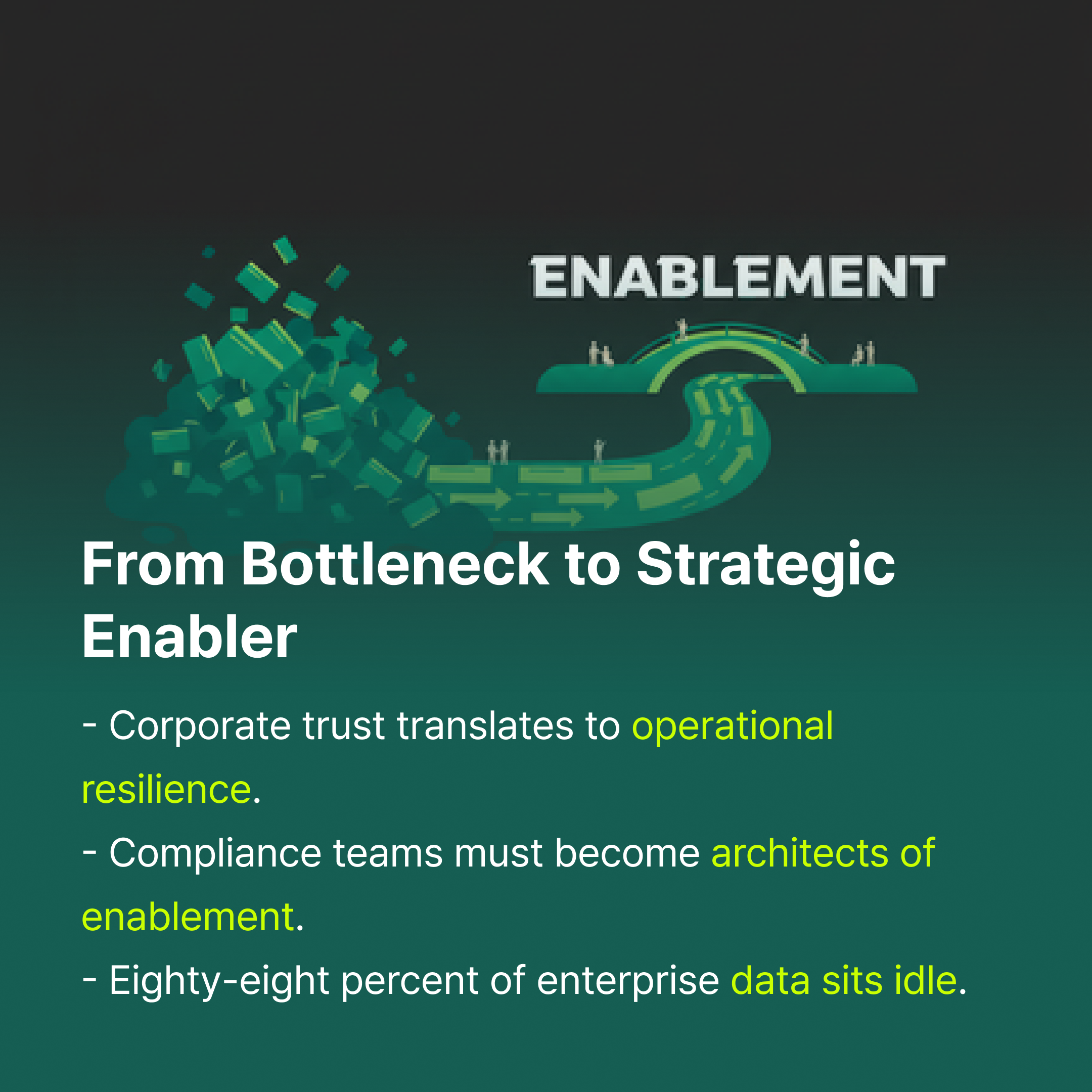
Corporate trust translates directly into operational resilience and competitive advantage. Turkish Technology recently published this insight regarding modern governance ecosystems. Compliance teams must evolve from their historical role as the office of “no” to become architects of enablement.
Only twelve percent of enterprise data is actually used today. Gartner confirms the remaining eighty-eight percent sits idle in data swamps. Reversible data activation unlocks this trapped value without violating a single regulatory mandate.
Your developers want to build significant things. Your legal team wants to avoid large fines. A functional gateway satisfies both departments.
We see substantial ROI when companies finally bridge this gap. Deployment timelines shrink from eighteen months down to a few weeks. The conversation shifts from risk mitigation to revenue generation.
How CUBIG Addresses This
We understand the friction between your procurement and engineering teams. Your analysts are eager to use the latest frontier models to summarize quarterly reports. Your board refuses to hand over corporate intellectual property to external vendors. This stalemate hinders progress and kills productivity.
Your documents stay inside your walls. The AI gets what it needs to give accurate answers. That is it.
Consider your financial operations team running a complex merger analysis. They need Claude to review large pricing tables. LLM Capsule provides Enterprise Context Control so you decide exactly what constitutes a sensitive number. It guarantees Zero Exposure, meaning your original pricing data never leaves your environment. When the AI formulates its strategic review, Rehydration Restoration automatically brings all those key names and numbers back. The final report actually makes sense to your analysts.
You can switch freely between models without changing your internal policies. Cross-Model Execution lets you easily test OpenAI against Anthropic. Your team gets the tools they want, and you get the audit trail you need.
FAQ
How does an AI data gateway differ from a standard gateway?
A standard gateway merely routes network traffic and manages IP visibility. An AI data gateway actively inspects and modifies the unstructured payload within the prompts. It intercepts documents, applies semantic rules, and ensures sensitive business context never reaches external application programming interfaces. This granular control specifically addresses the unique risks of large language models.
Does capsulation break the context of my legal contracts?
No. Standard redaction deletes words and breaks document flow. Capsulation replaces sensitive terms with structurally identical surrogate tokens. The language model still understands that a specific token represents a company name or a currency value. It can map the relationships precisely to summarize the contract accurately.
Can we use LLM Capsule with our existing enterprise applications?
Yes. LLM Capsule sits as a vendor-neutral intermediary between your internal applications and the external AI vendors. You do not need to rebuild your internal databases or alter your core software architecture. It smoothly integrates into existing workflows to ensure strict AI compliance across your entire organization.
Why do employees continue engaging in shadow AI practices?
Employees engage in unauthorized usage because consumer tools offer significant productivity boosts that internal corporate tools lack. When IT departments restrict access to frontier models, workers bypass the rules to meet tight deadlines. Providing a functional, compliant path eliminates the motivation to use unvetted external accounts.
What is Rehydration Restoration?
It is a proprietary feature that fixes the useless output problem. When an external model generates a response based on surrogate tokens, the system intercepts that response. LLM Capsule then maps the surrogate tokens back to the original real-world values before showing the answer to the user. The employee reads a fully accurate, context-rich document.
Does this approach limit which AI models we can purchase?
It actively expands your purchasing options. Cross-model capabilities mean you are never trapped into a single vendor ecosystem. You can route specific document tasks to the model best suited for the job while maintaining one consistent set of governance rules. This prevents vendor lock-in and optimizes your software budget.
How do we define what data requires capsulation?
You maintain complete administrative authority over the dictionary of sensitive terms. You can mandate capsulation for standard personally identifiable information alongside your unique trade secrets. This includes internal project code names, unreleased financial figures, and proprietary supply chain metrics. The system adapts entirely to your specific corporate risk profile.
CUBIG's Service Line



Recommended Posts