Table of Contents
Key Takeaways
- According to Gartner’s 2025 predictions, organizations will abandon 60% of AI projects by 2026 due to unsupported data pipelines.
- Shadow AI — the unauthorized use of AI tools by employees without IT oversight — is accelerating faster than governance teams can respond.
- LLM Capsule is a document-level AI Gateway developed by CUBIG that restructures organizational data into model-friendly forms without exposing originals, enabling enterprises to adopt LLMs while maintaining full compliance.
Enterprise data teams face a massive bottleneck with LLM compliance. The gap between what AI can do and what your governance allows it to touch keeps widening.
You cannot deploy agentic models if raw files remain exposed to vendor endpoints. Executives want rapid deployment. Legal departments mandate strict compliance. Nobody wins when those two forces collide.
We need to rethink how information flows across boundaries. Your documents stay inside your walls. CUBIG’s LLM Capsule restructures them into a readable form without exposing the originals — so the AI gets context, and your files stay put.
Why Are 60% of Generative AI Projects Failing?
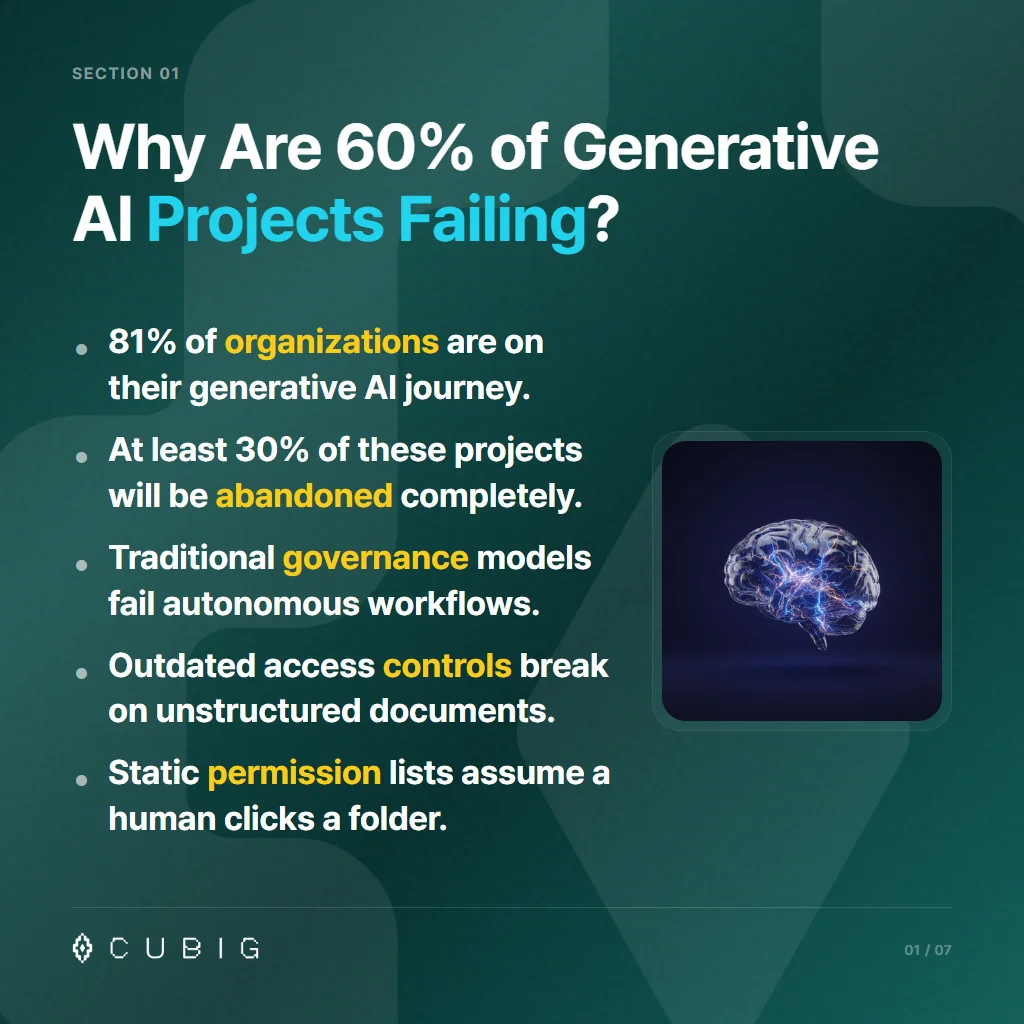
Generative AI projects fail because traditional governance models cannot handle autonomous workflows. Outdated access controls break the moment agents try to read complex unstructured documents. A static permission list assumes a human is clicking through a folder. Agents don’t work that way.
81% of organizations are currently on their generative AI adoption journey. Gartner’s 2025 AI Risk Management research shows at least 30% of these projects will be abandoned after proof of concept. Inadequate risk controls cause this drop-off. Teams build a great prototype. Then the compliance review board kills the production rollout.
The alternative is not restriction — it is restructuring. Platforms like LLM Capsule enable reversible data capsulation, letting AI models work with full context while originals stay untouched.
Does Your LLM Compliance Strategy Handle Agentic Workflows?
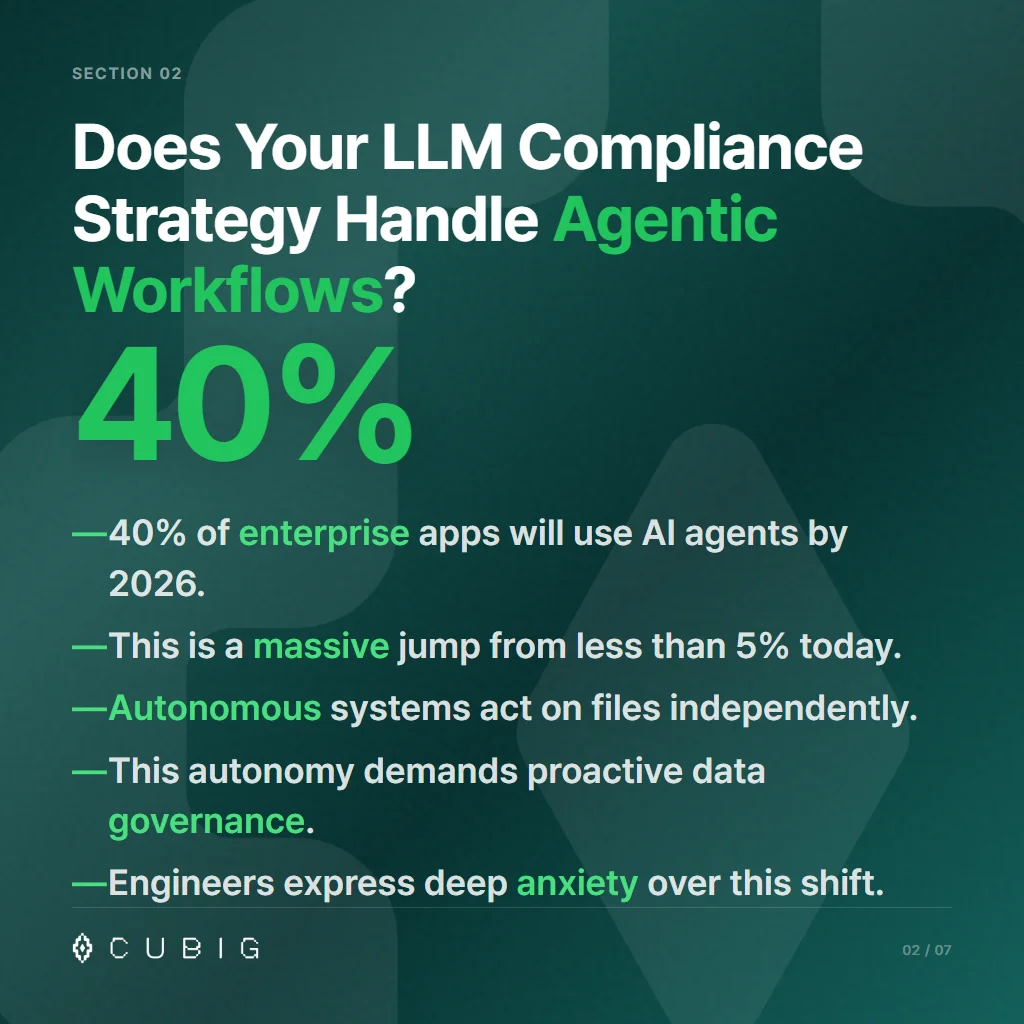
40% of enterprise applications will integrate task-specific AI agents by the end of 2026.
That is a massive jump from less than 5% today. Conversational chatbots wait for a human to prompt them. Autonomous systems act on files independently, chaining calls across databases, spreadsheets, and internal docs. This autonomy demands proactive agentic AI data governance embedded right at the source — not bolted on after the fact.
Engineers feel the pressure. A developer on a Reddit compliance forum recently flagged that passing untrusted inputs into execution environments creates gaps nobody planned for.
Effective LLM compliance relies on zero-exposure architectures where original documents never leave the internal environment. Separate the reasoning engine from raw information retrieval. The agent gets the context it needs. Your proprietary files remain unseen by external servers.
How Does Natural Language Break Your Architecture?
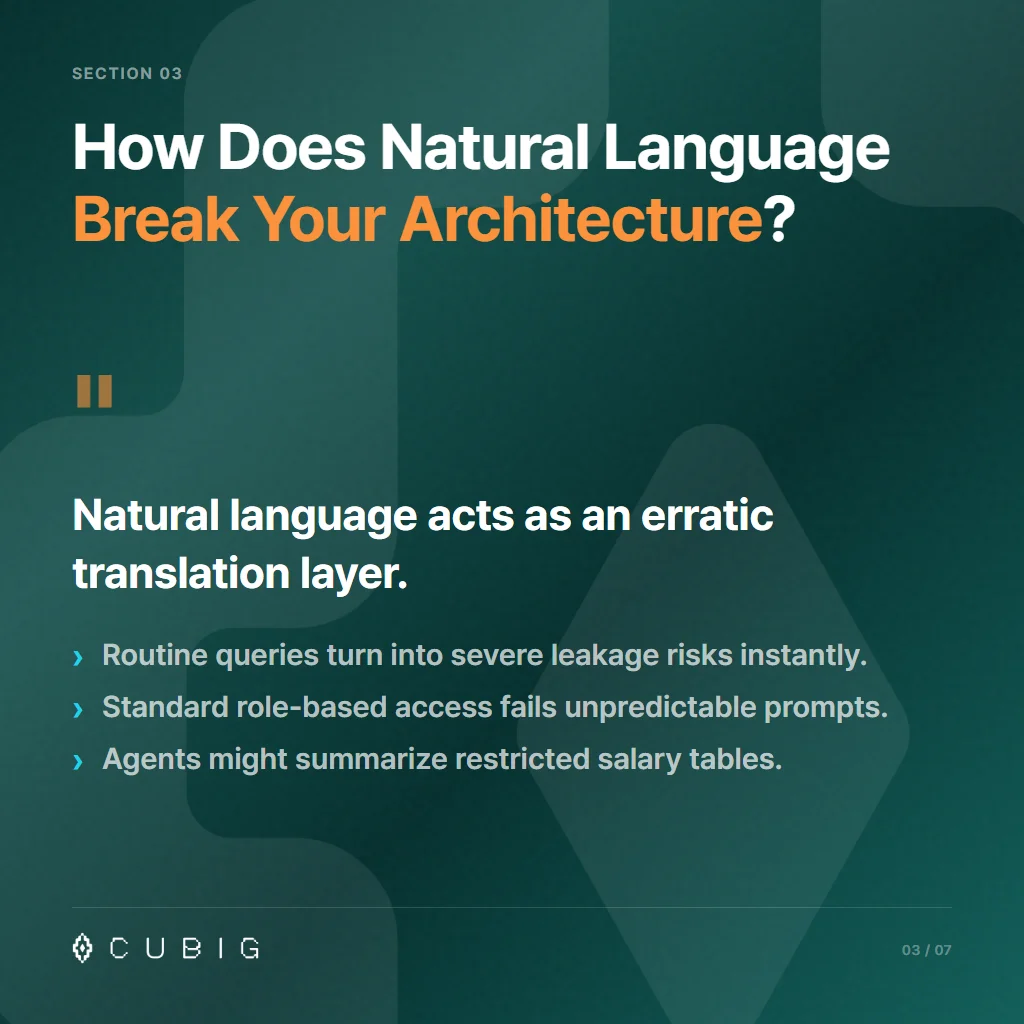
Natural language acts as an erratic translation layer between the user and your raw databases. Routine queries turn into leakage risks almost instantly. Standard role-based access protocols fail against unpredictable prompt structures. You might restrict someone from viewing salary tables — but an agent could summarize that exact table to answer a broad question about department budgets.
Legacy redaction software permanently deletes text before it hits the model. The language engine receives blank spaces and returns useless output. Hacker News users regularly complain that models return malformed JSON when processing redacted files. One missing curly brace destroys the downstream application. An effective AI data gateway preserves the exact layout of your spreadsheets so the logic executes correctly — structure intact, sensitive values swapped.
Will AI Regulation Compliance Kill Your Production Launch?
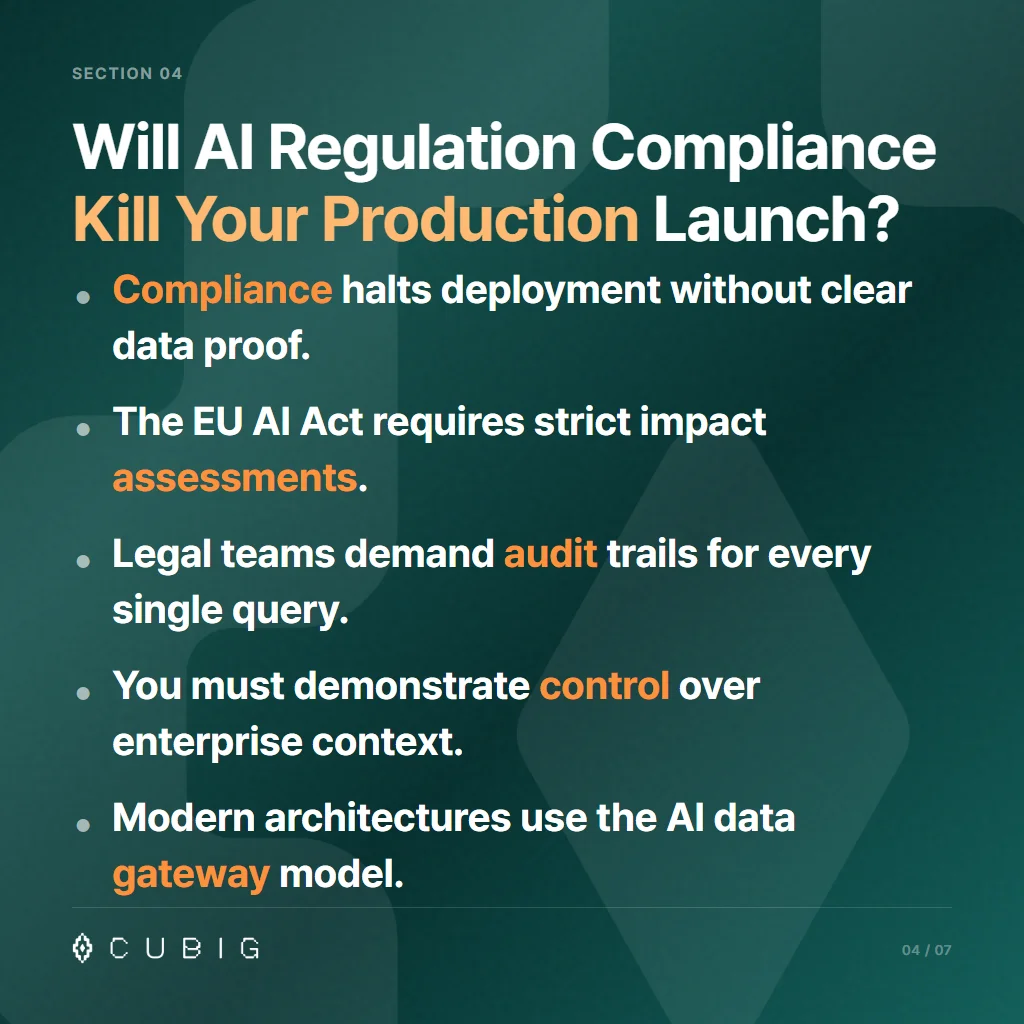
AI regulation compliance will halt your deployment if you cannot prove to auditors exactly what enters the language model. Regulatory mandates like the EU AI Act now require strict data governance impact assessments before algorithms touch sensitive files.
Legal teams demand clear audit trails for every query. You have to demonstrate full control over enterprise context across all system boundaries. Modern architectures address this through the AI data gateway model.
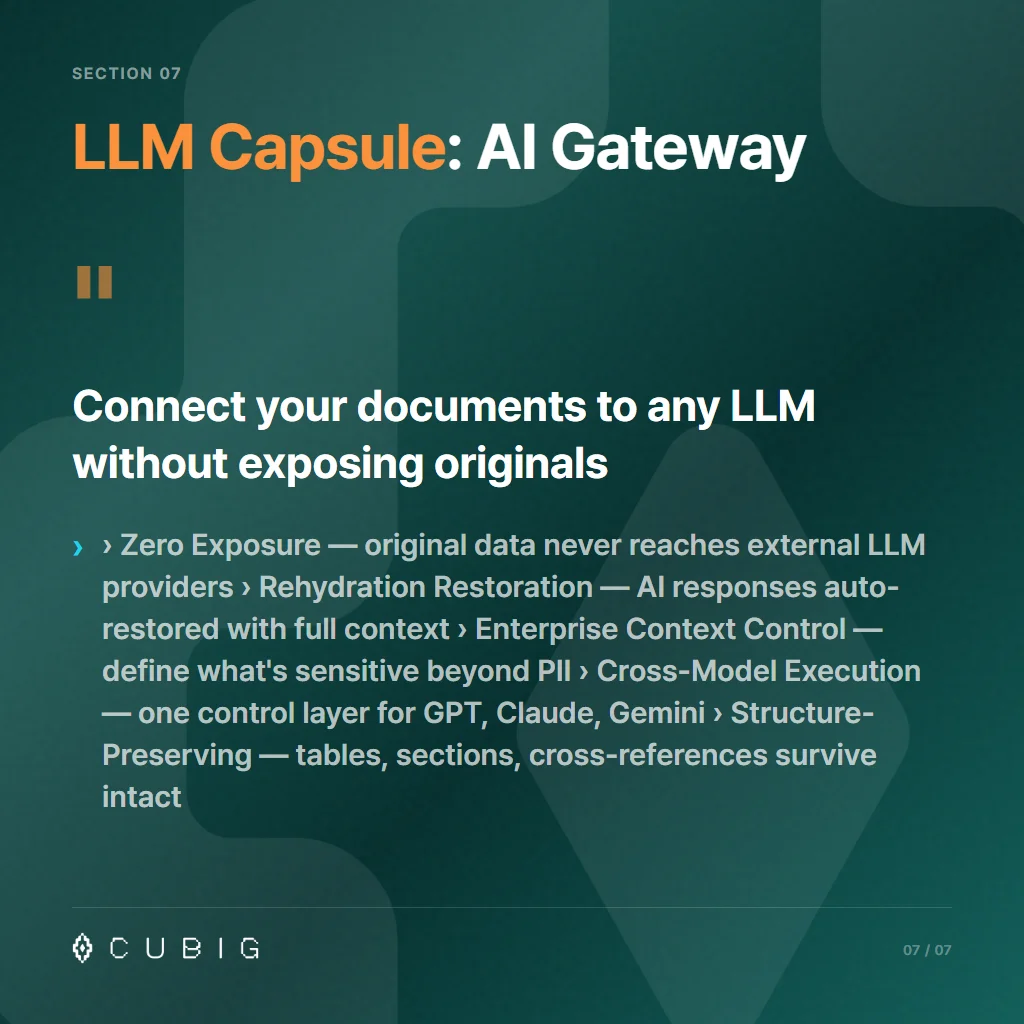
Unlike legacy redaction that returns blank spaces, CUBIG’s approach uses tokenization that automatically restores original text in final responses. This is called Rehydration Restoration — the first of LLM Capsule’s five differentiators.
Business leaders decide what qualifies as sensitive information. Trade secrets and internal pricing metrics require just as much care as personal identifiers. The technology handles the swap automatically. Users get readable insights without knowing the backend transformation occurred.
The Failure of Static Rule Sets in Multi-Agent Defense
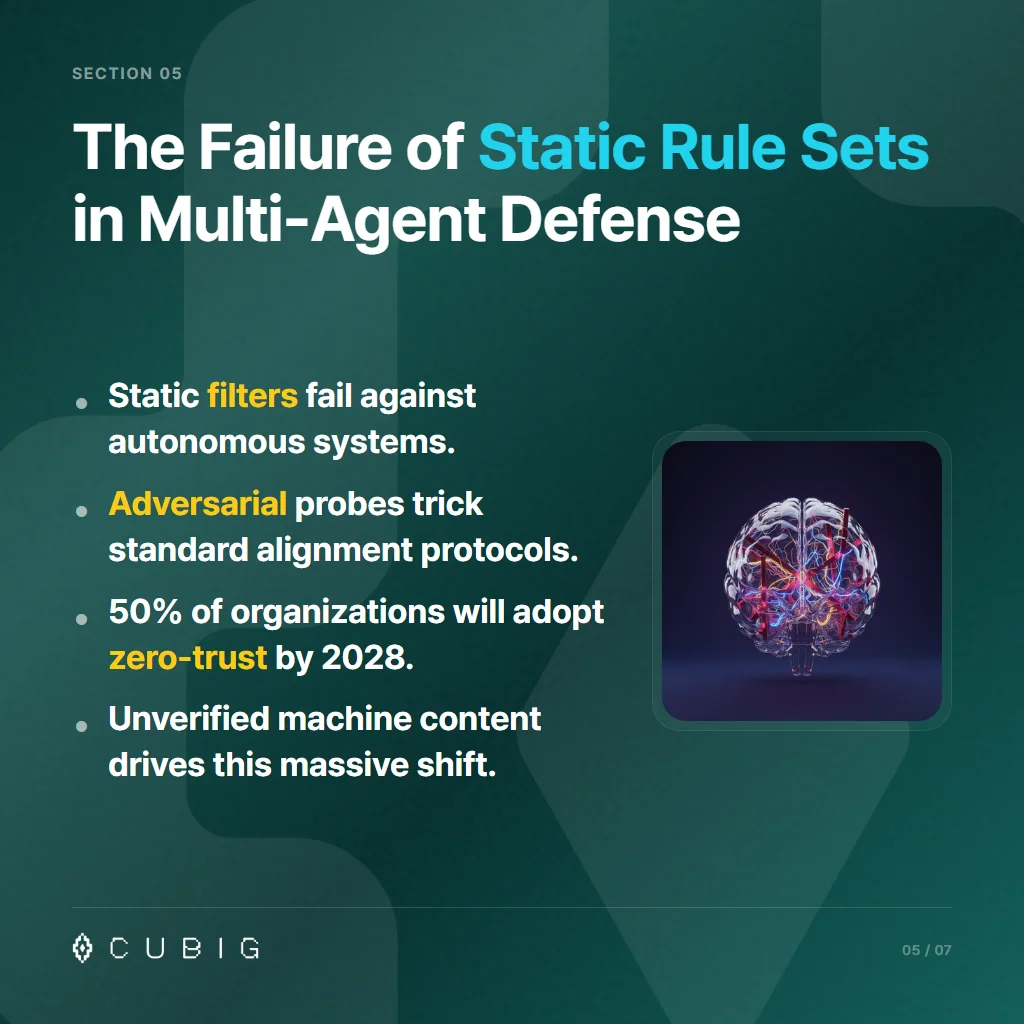
Academic research from the 2025 AegisLLM study shows that static filters fail against autonomous multi-agent systems. Adversarial probes easily trick standard alignment protocols once models start executing multi-step workflows. The rule set you wrote for a single-model chatbot does not hold up when four agents are passing context between themselves.
50% of organizations will adopt a zero-trust posture for data governance by 2028. Gartner points to the staggering volume of unverified machine-generated content as the primary driver. When half the data flowing through your pipeline was written by another model, you need governance that works at every layer — not just the perimeter.
Has your engineering team tested how your current stack handles an automated prompt injection attack?
Designing a Vendor-Neutral Layer for LLM Compliance
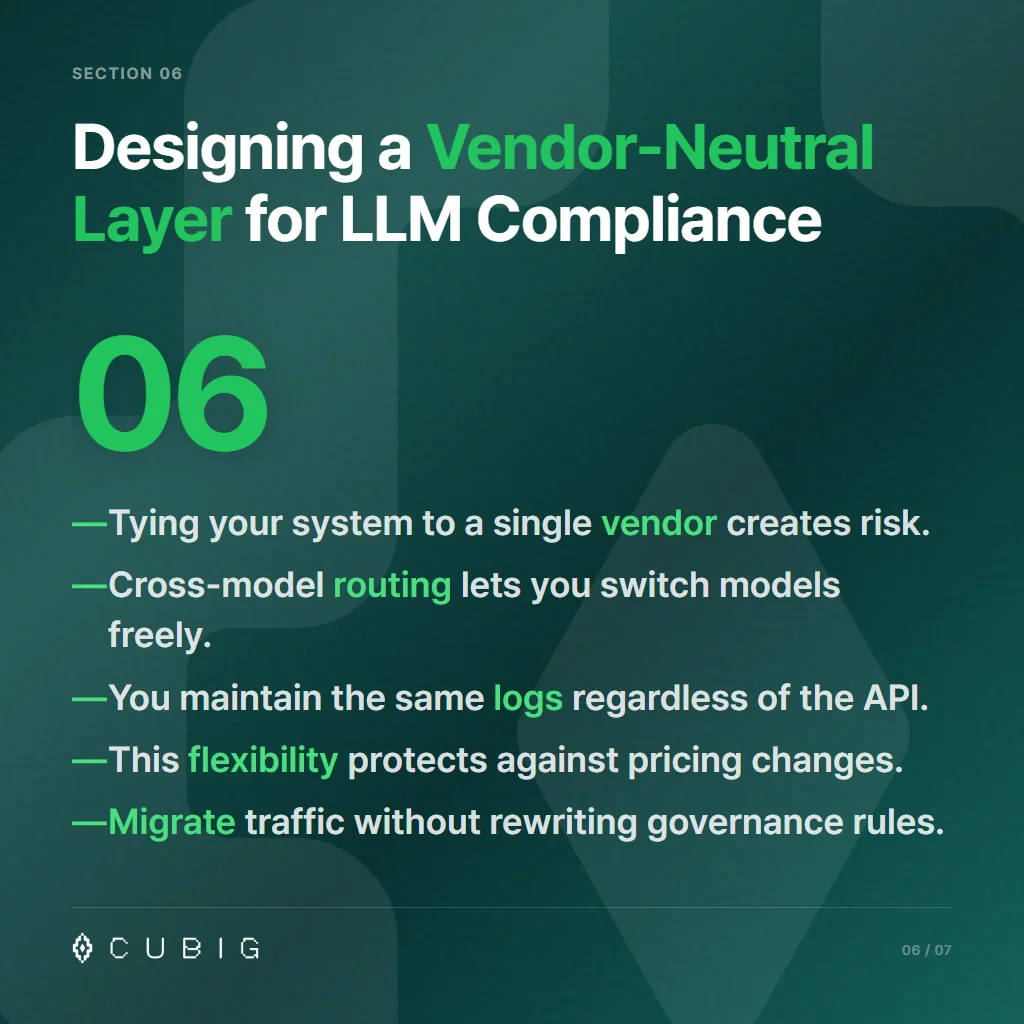
Tying yourself to a single vendor creates unnecessary long-term risk. Cross-Model Execution routing lets you switch freely between GPT, Claude, and Gemini. You maintain the same audit logs regardless of which API handles the request. If a new open-source alternative outperforms your current provider, you migrate traffic without rewriting governance rules. That flexibility matters more than most teams realize on day one.
Effective LLM compliance in the enterprise requires a vendor-neutral AI Gateway that decouples raw files from model execution through reversible capsulation. The business retains total ownership of its digital assets. Internal information never crosses that boundary in plain text.
Capsulation layers sit right where internal systems meet external services. Data activation happens across the entire organization. Every department gets the insights they need — and none of the exposure they fear.
How CUBIG Addresses This
I have watched strong data engineering teams throw away months of work because legal killed the project at the finish line. You want to give your staff the best generative tools available, but handing over your entire unstructured repository to a third-party endpoint is a deeply uncomfortable prospect.
Your documents stay inside your walls. The AI gets what it needs to give accurate answers. That is it.
Think about how DB Insurance handles customer analysis. They analyze complex behavioral trends without ever exposing a single real name or policy number to the vendor endpoint. LLM Capsule sits across their network boundaries as a neutral layer — capsulating information going out and restoring it coming back. The marketing department gets accurate summaries. The raw files remain untouched.
You stop fighting over privacy constraints and start building actual value. When teams trust the underlying infrastructure, they move faster. That trust comes from knowing the originals never leave. Learn more about how CUBIG transforms unusable data into usable data.
FAQ
What happens if an AI agent tries to read a complex spreadsheet?
Unstructured file processing usually breaks when legacy redaction software strips key formatting. LLM Capsule maintains the structural integrity of spreadsheets during capsulation — columns, rows, and formulas stay intact. The model reads proper cell references. Your team gets accurate results without risking proprietary formulas. This Structure-Preserving capability matters for any enterprise running analytical workflows on financial documents or large tabular datasets.
Can we switch between different language models easily?
Most organizations accidentally lock themselves into one API ecosystem over time. A vendor-neutral data layer lets you route requests to GPT today and Claude tomorrow. Capsulation rules apply uniformly across all external connections — no need to rewrite your governance protocol. Cross-Model Execution keeps your infrastructure resilient against sudden vendor pricing changes and unexpected service outages.
How does reversible capsulation differ from standard redaction?
Standard redaction permanently deletes text before sending files to external endpoints. The model returns clunky sentences full of blank spaces. Rehydration Restoration takes a different approach: it swaps sensitive terms for temporary tokens. The platform then puts the original words back into the final AI response automatically. Users read a normal sentence with real context. The vendor never sees the original values.
Does this approach satisfy strict government audit requirements?
Public sector deployments face the hardest compliance hurdles in enterprise software. Systems must generate exhaustive logs for every external API call. The Gangnam District Office implemented LLM Capsule to run air-gapped document automation inside their controlled environment. They proved exactly what left their network and what stayed. Detailed audit trails let regulatory bodies verify full AI regulation compliance on demand.
What qualifies as sensitive information in this framework?
Many tools only flag credit card numbers and standard personal addresses. Enterprise Context Control lets you define custom parameters for your specific industry. Capsulate unannounced product roadmaps, executive meeting notes, internal financial projections — whatever the business decides matters most to its competitive advantage. The AI data gateway enforces those rules across every query automatically.