
AI governance platforms describe and police AI at the policy layer, while the CUBIG operating layer acts at the data-and-run layer, so a decision is not just documented as compliant under AI data governance but can actually be reproduced and proven from records.
Buy an AI governance platform and you get policies, model inventories, risk registers, and documentation. That is real value, and for many obligations it is exactly what a regulator wants to see. The gap opens when someone asks you to prove that a specific decision was what your documentation says it was. A policy record describes intent; it does not rebuild the run. The CUBIG operating layer covers that second half. Governance itself is standardizing: ISO/IEC 42001 arrived as the first AI management system standard, with scope spanning AI lifecycle management, risk and impact assessment, and supplier oversight. Certifying how you govern is still not the same as rebuilding what a run did.
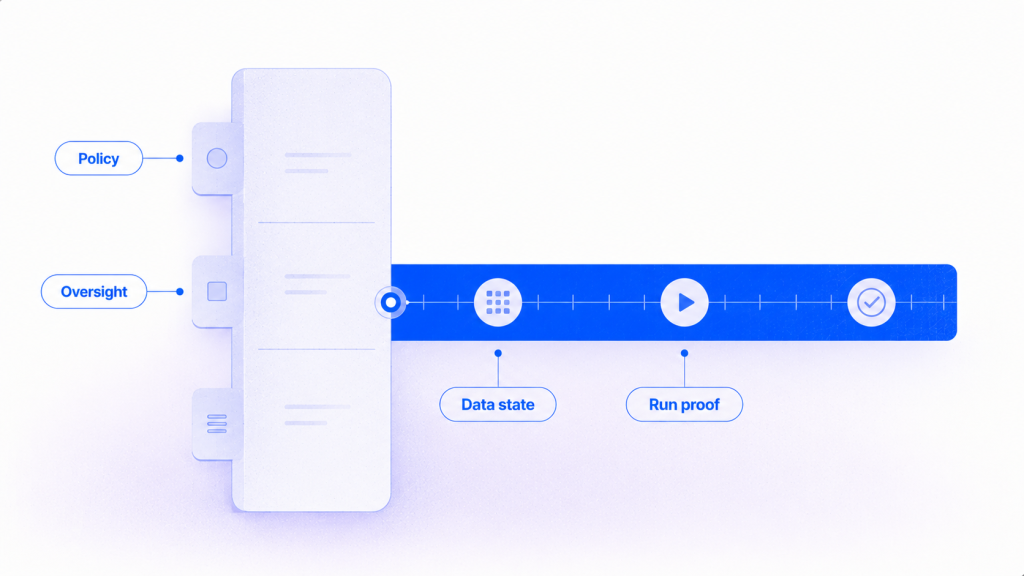
What AI governance platforms do
An AI governance platform organizes the oversight of AI across an organization. It maintains a model inventory, tracks risk and bias assessments, records approvals, maps controls to frameworks, and produces the documentation an auditor or board expects. This is necessary work, and doing it in one place beats scattering it across spreadsheets. The expectation reaches the intergovernmental level: the OECD AI Principles, which 47 governments adhere to, count transparency, accountability, robustness, security and safety among their tenets, and a governance platform is where that documented practice gets produced.
What these platforms record is largely about the system and the process: which model exists, who approved it, what policy applies. That is the policy layer. It answers what you intend and what you have declared, and it does so well.
Where the policy layer runs out
Documentation describes a decision; it does not reconstruct one. When a regulator points at a single output from three months ago and asks you to justify it, a governance record can show the model was approved, and the policy was in force. It cannot show the exact data the model read that day, nor can it rebuild the run to demonstrate the result. The evidence stops at the paperwork, one layer above where the decision was actually made.
This is not a flaw in governance platforms; it is their scope. They were built to govern, not to reproduce. Reproduction requires the data state from each run, which lives a layer down in the execution itself.
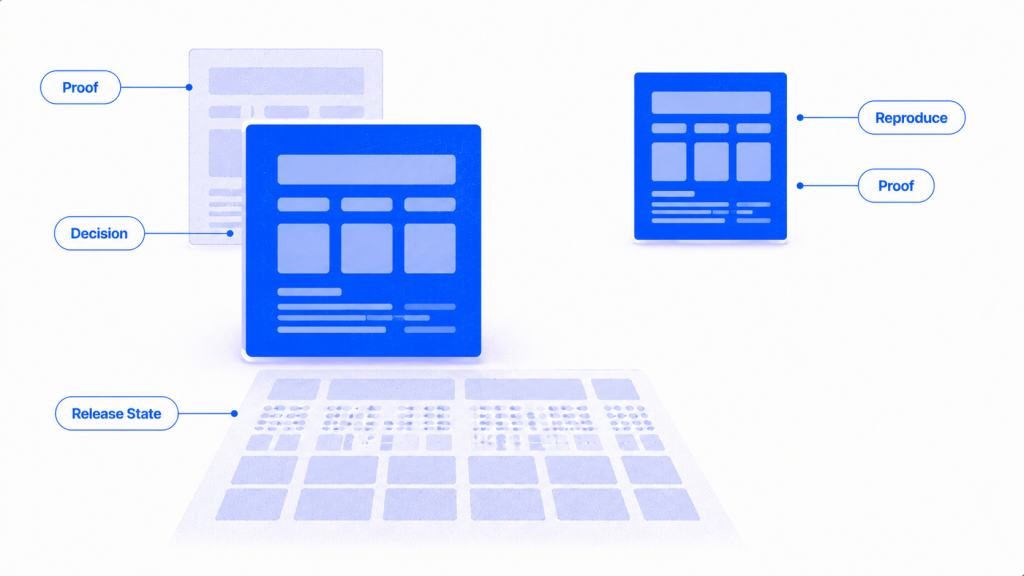
Regulation is already writing requirements at that depth: Article 10 of the EU AI Act holds the training, validation, and testing data of high-risk AI systems to quality criteria under documented data-governance practices, data that is relevant, sufficiently representative, and as error-free and complete as possible.
| Dimension | AI governance platform | CUBIG operating layer |
|---|---|---|
| Layer | Policy and oversight | Data state and run |
| Primary output | Policies, inventory, documentation | Release State, run binding, reproduce |
| Answers “was this governed?” | Yes | Partial |
| Answers “can you rebuild this run?” | No | Yes |
| Audit evidence | Records of intent | Reproducible result |
Two layers, not two products to choose between
The operating layer and the governance layer are complementary, and treating them as either-or leads to a program that appears compliant but cannot prove it. A governance platform tells the story of how AI is managed; the operating layer supplies the evidence that the story is true, run by run.
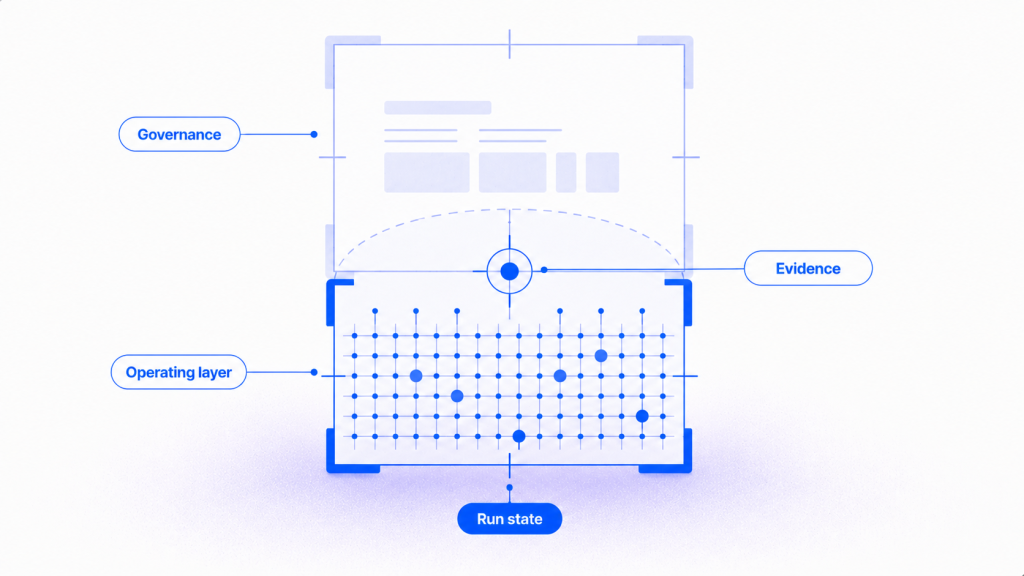
Keep the AI data governance platform for policy, inventory, and oversight, and add the operating layer so that any documented decision can be resolved back to the data state that produced it and replayed on demand.
Put plainly, governance says the decision was allowed; the operating layer shows the decision, rebuilt. Auditors increasingly want the second, because the first is a claim and the second is proof.
Is your AI data governance backed by reproducible runs?
- If a regulator names one past decision, can you rebuild the exact data it used, or only show it was approved?
- Does your evidence stop at documentation, or reach the run itself?
- Can you diff two runs to explain why their outcomes differed?
- Could you replay a six-month-old decision and reproduce the same result?
If your governance stops at records of intent, the operating layer is the half that turns those records into proof.
Where the CUBIG operating layer fits
The CUBIG operating layer runs on the Syntitan platform. It scores enterprise data on six readiness axes, Usability, Integrity, Context, Consistency, Reproducibility, and Traceability, and binds every AI or agent run to a data state you can Diff and Reproduce. Governance platforms sit above it at the policy layer; the operating layer gives their records something reproducible to stand on. For more, see what AI-ready data means and how operating control compares to AI governance frameworks. For a public-sector example of rebuilding and examining a past decision, see an audit trail for AI decisions in the public sector.
Any figure you see is representative until you reproduce it on your own data.
Try it on your data for free. Run a sample proof and see it on your own workflow.