




AI-Ready Data
Foundations8

Semantic Layers Tell AI What Data Means. AI Tasks Often Need More.
A semantic layer gives AI shared business meaning. A specific AI task often needs its own record selection, time window, and test…

Same Customer Data, Two AI Tasks, Two Different Preparations
AI data preparation is task-specific. The same customer data needs different records, time cutoffs, field meanings, and checks for a churn model…

Business Process Automation Starts by Defining the Work
A documented process can still be too vague to automate. Learn how work units, decisions, owners, input boundaries, and a measurement formula…

Data Blockers: Restricted, Unusable, Unstable in Enterprise AI
The three data blockers are why enterprise AI stalls on its data: restricted, unusable, or unstable. What each one means and how…

AI-Ready Data: Every Platform Claims AI Readiness — Ready for What?
Catalogs, governance suites, lakehouses, and synthetic data tools all claim to make data AI-ready, but mean different things. Which meaning survives production?

Agent-Ready Data Needs Semantic Context
Agent-ready data is enterprise data that carries the business meaning, access conditions, and freshness an autonomous AI agent needs to act on…

AI-Ready Data vs Clean Data: Why Clean Isn’t Enough
Clean data passes type, null, and duplicate checks. AI-ready data clears one more bar: a model can still learn from what's left…

What Is AI-Ready Data? Definition and Why Clean Data Isn’t Enough
AI-ready data is data verified to work for a specific AI task, model or agent, and evaluation standard, and verified again when…
Track and Reuse AI Data9

Your Model Changed and Your Data Changed. Which One Drove the Result?
A frozen evaluation set does not freeze the data your AI task reads. Pin the data version, record a baseline before retirement,…

Which Version of the Data Passed the Test?
Data versioning records what changed. It does not say whether earlier validation results still apply. How to decide what to revalidate after…
Same Seed, Different Result: What LLM Reproducibility Requires
A fixed seed controls only part of an AI run. Learn which data, code, environment, hardware, batching, and evaluation conditions LLM reproducibility…
Release State vs Dataset Snapshot: What Reproducible AI Needs
Release State vs dataset snapshot: a snapshot is a passive copy of data at a point in time; a Release State is…
How Diff Works on Data State: See What Changed in an AI Run
A data-state diff compares two Verifiable Data States field by field, showing exactly what changed in the data an AI run used:…

Model Versioning Is Not Enough for Reproducible AI
Your model registry can't reproduce a run. Data state, preprocessing, and permissions shift under the same model version. Here's what closes the…

What Is Run Binding? Tying AI Runs to Data State
Run Binding ties every AI run to the exact data state it executed on. How it makes results traceable, comparable, and reproducible…

What Is Release State? Reproducing the Exact Data Your AI Ran On
Release State seals the exact data your AI ran on, so any run can be reproduced months later. What it is, why…
AI Readiness Assessment for Enterprise Data: Six Axes and a Data Readiness Score
An AI readiness assessment for data checks enterprise data on six axes and returns a Data Readiness Score for each. The score…
Production AI Failure Patterns14

The Draft Took Seconds. Checking Its Assumptions Took the Afternoon.
An AI draft takes seconds yet can cost a reviewer the afternoon. Human-in-the-loop review stays slow until drafts carry sources, conditions, and…

The Exception Expired. The AI Summary Kept It Alive.
An AI summary can copy a policy exception word for word and still drop who it covers and when it ends. Enterprise…

LLM Benchmark Comparison: When Are Two Scores Comparable?
An LLM benchmark comparison needs more than matching test names. Check the harness, scoring rules, budgets, test versions, and graders before ranking…

Your Second AI Deployment Should Inherit More Than a Slide Deck
A first AI deployment leaves behind exception rules, field definitions, and validation cases. See which AI data preparation steps the next team…

RAG vs Fine-Tuning: Choose the Next Test Before the Method
RAG vs fine-tuning starts with the failure. Learn when to test retrieval, direct context, or training, and what evidence should guide the…

Context Engineering for AI Agents: What to Keep at Each Step
A correct source can still lead to a wrong agent decision. Learn how to inspect context selection, resolve outdated working assumptions, and…

When an LLM Evaluation Score Drops, What Actually Failed?
An LLM evaluation score can flag a release problem without identifying its cause. Learn which evidence can narrow the failure to code,…

Why LLM Benchmark Rankings Do Not Transfer to Your Work
An LLM benchmark can shortlist models, but rankings may not transfer to private work. Learn how to build a held-out evaluation for…

Why AI Model Accuracy Expires and How to Revalidate It
Model performance degradation can make an old accuracy score misleading. Learn how to date, revalidate, and support model results with current evidence.
The Hidden Cost of Stale Reference Data in Production AI
Stale reference data is when the lookups, mappings, and rules an AI model relies on fall behind reality, so it keeps answering…
Preprocessing Drift in Production AI
Preprocessing drift is when the steps between raw data and model input change, so the model sees different inputs while its version…
Schema Changes Break Production AI: The Silent Release
Schema changes break production AI: a renamed column, new category, or type shift alters what reaches the model, so behavior changes while…

How to Reproduce an AI Incident: A 6-Step Playbook
To reproduce an AI incident, recreate the exact data state and execution conditions that produced the wrong output, then rerun the model.…

Why AI Fails After Deployment: It’s the Data State
AI often fails after deployment not only because of the model but because the data state and conditions behind it moved. Why…
Comparisons17
Monte Carlo Data Observability vs Syntitan: What the Evidence Can Prove
Monte Carlo covers data and agent observability. See what its evidence proves for an AI result, and when you also need validated,…
Alation Data Catalog vs Syntitan: Where the Evidence Chain Changes
Alation connects governed data, context, agents, and evaluations. See what its evidence covers for AI and where data-state validation begins.
Atlan Data Catalog vs Syntitan: Context Governance or AI-Ready Data State?
Atlan governs enterprise context, metadata, lineage, and AI assets. See what that evidence covers and where task-specific data validation begins.
Dataiku vs Syntitan: What Evidence Does an AI Run Need?
Dataiku records flows, bundles, and model versions. See what that preserves for an AI run and what is missing when a result…
Databricks Time Travel and Lakebase vs Syntitan: What Each One Proves
Databricks Time Travel and Lakebase restore earlier data states. See what they prove for an AI result and what run-level evidence they…
lakeFS vs Syntitan: Data Versioning Is Not AI Readiness
Version history can restore a known data state. It cannot, by itself, show whether that state is fit for a specific AI…
Operating Control vs AI Governance Frameworks: Policy and Proof
AI governance defines what you may do with AI. Operating control produces the run-level evidence proving how a specific AI result actually…

Operating Control vs CI/CD for ML: What Each Reproduces
Operating control vs CI/CD for ML: CI/CD reproduces the build; operating control reproduces the production result by binding the data state behind…

Operating Control vs Feature Store: What Each One Records
Operating control vs feature store: a feature store serves consistent features; operating control records the AI-ready data state behind each run.

Operating Control vs Data Catalog: Discovery vs Reproducibility
Operating control vs data catalog: a catalog helps people find and govern data; operating control records the data state each AI run…

Operating Control vs AI Monitoring Tools: Detect vs Reproduce
Operating control vs AI monitoring: monitoring says output drifted; operating control says which data state caused it and lets you reproduce the…

Operating Control vs Generic MLOps: Versioning the Data State
Operating control vs generic MLOps: operating control records which data state each AI run used and reproduces it exactly, the versioning MLOps…
Operating Control vs Model Registry: Which Reproducibility Gap Are You Missing?
Operating control vs model registry: a registry versions the model artifact; operating control versions the data state behind a run, so you…

Operating Control vs MLflow: Where Reproducibility Breaks
Operating control vs MLflow: MLflow tracks the model lifecycle; operating control records the data state behind each run, so AI results reproduce.
Databricks vs Syntitan: governing the estate, reproducing the run
Databricks Unity Catalog governs the data and AI estate. See what it records, and what it takes to reproduce the data state…
Snowflake Horizon vs Syntitan: semantic meaning and reproducible AI runs
Snowflake Horizon Catalog adds semantic context, governance, and policy across Snowflake. See what it covers for AI data and what a reproducible…

Collibra vs Syntitan: two answers to two different questions
Collibra governs whether an organization may use its data. See how that differs from proving an AI result reproduces, and why most…
Validation Examples4
Audit Trail for AI Decisions: A Public Sector Proof
An audit trail for AI decisions records the data state and conditions behind each one, so a public sector reviewer can reproduce…
OT Data Reproducibility: Making Manufacturing AI Repeatable
OT data reproducibility is the ability to rebuild the exact operational data state, sensor calibrations, sampling rates, and tag mappings, behind a…

Backtest Reproducibility Under Audit in Finance
Backtest reproducibility means restoring the exact data state a model backtest ran on, so an auditor can confirm the performance came from…
Reproducible Cohort Analysis in Healthcare: A Proof Example
Reproducible cohort analysis means any patient population you define can be recreated later from a recorded data state, so a second review…
Data Enablement
DTS foundations5

Data Readiness Diagnosis: The Diagnose Step in DTS
The Diagnose step is the first stage of DTS, measuring why a dataset is restricted, scarce, or structurally broken before anything is…

Structure-Preserving Synthesis: Make Restricted Data Usable for AI
Structure-preserving synthesis turns restricted, scarce, or messy enterprise data into a usable dataset while keeping its statistical structure intact.
The DTS Transform Step in Depth: How DTS Fills the Gaps in Your Data
The DTS Transform step synthesizes, from locked or scarce data, a dataset a model can learn on, preserving structure without exposing originals.
DTS Validation: How Do You Know Synthetic Data Is Good Enough?
DTS validation checks whether synthesized data is good enough for a specific AI task: fidelity, utility, privacy, and coverage, before you trust…

What is DTS? Data Enablement for AI
DTS is CUBIG's data enablement engine for AI: it fills missing cases, adjusts skewed distributions and prepares locked, scarce or regulated data…
Validation and industry5

Synthetic Data Augmentation: When It Helps Classifier Training
Learn when synthetic data augmentation can help image classifiers, how to compare training approaches, and what to check before using generated examples.
Synthetic Data Validation: How to Balance Utility and Privacy
Learn how to validate synthetic data by setting utility and privacy thresholds, testing fidelity, leakage risk, and rare-case coverage before release.
Synthetic Data for Fraud Detection: Adding Rare AML Cases with DTS
Synthetic data adds examples of the rare fraud and money-laundering patterns that real datasets lack, giving fraud and AML models enough labeled…
Rare Defect Synthesis for Manufacturing: Adding the Defect Cases Your Model Lacks
Rare defect synthesis turns scarce defect data into a balanced dataset that preserves production-line structure, so vision models can learn to catch…
Synthetic Data for Clinical Research: Rare Cohort Augmentation with DTS
Synthetic patient data preserves a population's structure, including rare cohorts, so models can learn when real records are too restricted or scarce.
Sensitive AI workflow
Substitute · Execute · Reconstruct5

From PII Masking to Workflow Enablement
From PII masking to workflow enablement: the shift from hiding sensitive data so a model can't misuse it to substituting it so…
Local Mapping Store: Keeping the Mapping Inside the Boundary
A local mapping store keeps the mapping between your real values and their structure-preserving stand-ins inside your environment, so AI can run…
Restorable AI Data Boundary: Two-Way, Not a Blocking Gate
A restorable AI data boundary sends only a task's structure to the model and restores the original values in the result inside…
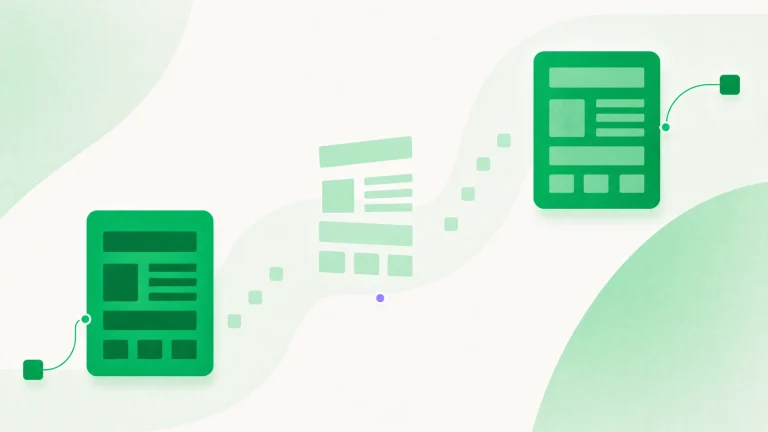
Substitute, Execute, Reconstruct: The Three Steps to Run AI on Confidential Data
Substitute, execute, reconstruct: run AI on confidential data by swapping sensitive values for stand-ins, then reconstructing the results inside your systems.
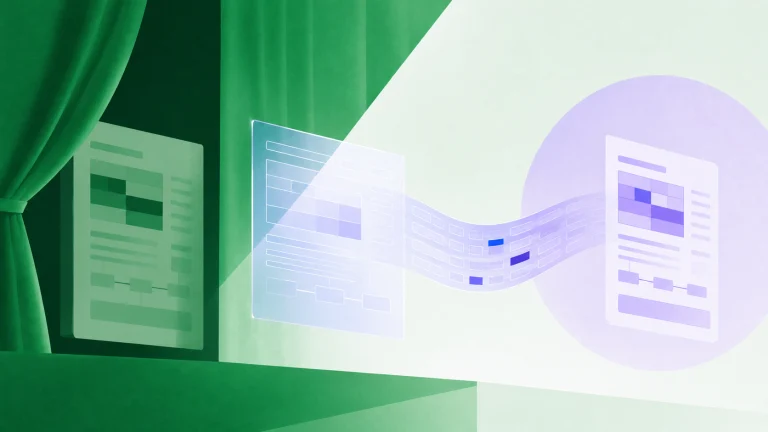
What is Sensitive AI Workflow Enablement?
Sensitive AI workflow enablement lets enterprises run AI on confidential data without exposing raw values: sensitive values are substituted, structure preserved.
Structure and Multimodal5
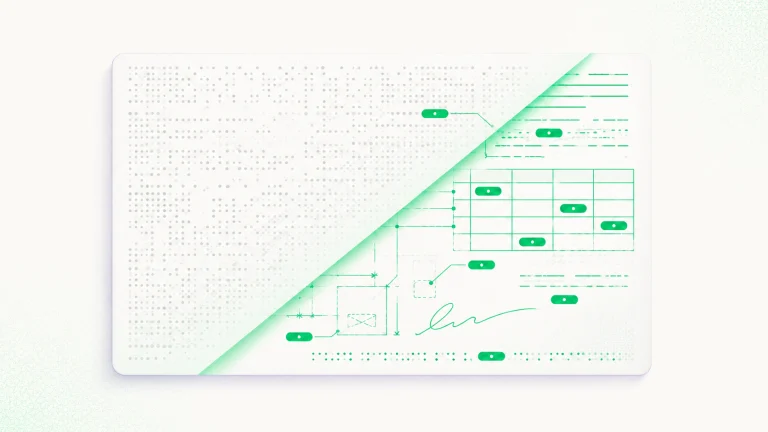
Visual Sensitive Data: Text Inside Images and Scanned PDFs
Visual sensitive data is information inside images and scanned PDFs, like part numbers, contract figures, and handwriting, that text pipelines never see.
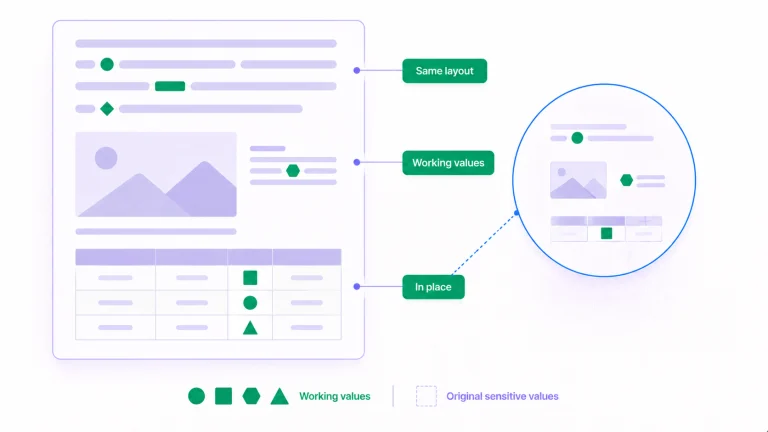
Multimodal AI Data Boundary: Running AI on One Whole Document
Run AI on documents that mix text, images, scanned PDFs, and tables by substituting the sensitive values in each part, then restoring…
Retrieved-Context Leakage in RAG: Where It Happens
Retrieved-context leakage in RAG happens when the retriever injects confidential source text into the model prompt, so sensitive values leave your environment.
Agent Tool-Output Leakage in Agentic AI Workflows
Agent tool-output leakage: an agent folds real data from a tool call into a later prompt, sending sensitive values onward. What causes…

Document Layout Preservation: Why Visual Structure Matters to AI
AI reads structure, not just words. Why tables, headers, and layout carry meaning models need, and how to keep document structure intact…
Workflow patterns4
Operational Artifact: The Real Unit of AI Delivery
An operational artifact is the real unit of AI delivery: a finished document with the original values restored in your environment, ready…
Confidential Business Context: The Data Beyond PII That Blocks AI
Confidential business context, such as pricing, contract terms, trade secrets and internal metrics, can block enterprise AI projects even when no personal…
Workflow Closure: When AI Actually Completes the Work
Workflow closure is when an AI step returns a finished business artifact, not a draft, because the original values are restored in…

LLM Data Egress: What Actually Crosses Into the Model and What Should
Every prompt is data leaving your control. What LLM data egress is, why it resists old controls, and how teams run AI…
Industry workflows5
Private LLM Workflows for Defense on Classified Data
Air-gapped LLM workflows let defense teams run a private LLM on classified material inside the enclave, using its structure instead of the…
AI on Telecom NOC Data: Topology and Subscriber Records
Run AI root cause analysis on telecom NOC data by correlating network topology and subscriber records, without either input leaving your environment.
Clinical AI Workflow on PHI: Run Models Without Exposing the Chart
A clinical AI workflow on PHI runs models on real charts while protected health information stays in the hospital and identifiers are…
Financial AI Workflow on Confidential Documents
A financial AI workflow runs document analysis on contracts, credit files, and pricing memos while the confidential originals stay inside the institution.
Public Sector: Running AI on Citizen Service Workflows
Running AI on citizen service workflows means sending a model the structure of a case, not the resident's real records, so agencies…
Decision & comparison
Discovery — When the question changes3
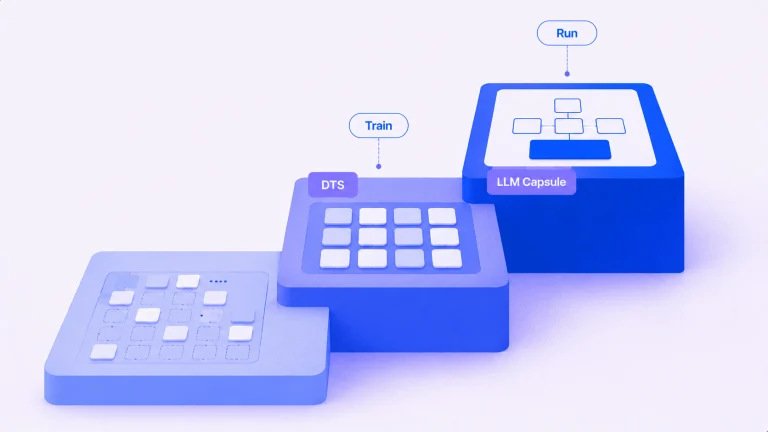
I Came for Synthetic Data. Do I Actually Need LLM Capsule?
Synthetic data or LLM Capsule? Pick synthetic data if your blocker is an unusable training set; pick LLM Capsule for a live…

Do I Need DTS If I Already Have LLM Capsule?
You need DTS when your data cannot teach or answer the model. LLM Capsule addresses a different problem: letting AI work with…
PHI Masking vs Synthetic Data: Which Does Your Healthcare AI Actually Need?
PHI masking vs synthetic data for healthcare AI: masking removes identifiers from real records; synthetic data rebuilds new ones. Which does your…
Adjacent comparisons5
CUBIG Operating Layer vs AI Governance Platforms: Policy vs Proof
AI governance platforms document compliance; the CUBIG operating layer works at the data-and-run layer, so a decision can be reproduced and proven.
LLM Capsule vs AI DLP: Block the Data or Finish the Work
AI DLP and LLM Capsule both deal with confidential data meeting AI, but AI DLP blocks the task while LLM Capsule substitutes…

DTS vs Data Anonymization vs Differential Privacy: How to Choose
Data anonymization strips detail, differential privacy adds noise, and DTS synthesizes data that stays usable for AI. A guide to choosing the…
Structure-Preserving Synthesis vs Generic Synthetic Data: 6 Differences That Decide Production
Structure-preserving synthesis keeps the correlations, rare patterns, and schema a model needs; generic synthetic data loses what decides production.

Why an AI Gateway Alone Isn’t Enough for Regulated AI
An AI gateway routes and logs model traffic, but it can't make the data inside sendable or the run reproducible. What it…

Choosing an AI-Ready Data Solution: Start With the Question You Cannot Answer Yet
Catalogs, observability, versioning, and AI-ready data platforms answer different questions. Find the one your stack cannot answer yet, then pick the layer.
No articles match the current filters.