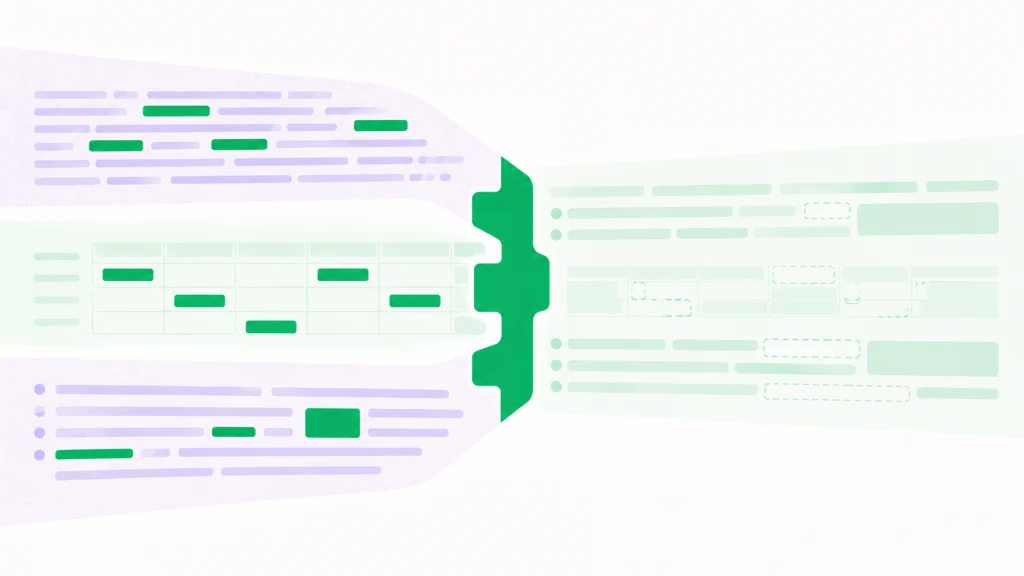
Retrieved-context leakage in RAG is when a retrieval-augmented workflow injects confidential source text straight into the model prompt, so sensitive values leave your environment inside every request the retriever helped answer.
The stakes here are not abstract. The OWASP Top 10 for LLM Applications ranks prompt injection first and sensitive information disclosure second, and disclosure is precisely what an ungoverned retrieval step produces: teams cannot put their real, useful documents in front of a model without losing control of what those documents contain. Researchers have shown this concretely: ConfusedPilot documents how a retrieval step can make an enterprise assistant surface a confidential document, even one already deleted, through the content it retrieves. A separate study by Zeng and colleagues demonstrated that RAG systems can leak the private documents held in their own retrieval database. Retrieval-augmented generation is where that tension shows up first, because RAG only works when it reaches into the material an enterprise most wants to protect.
Where retrieved-context leakage actually happens in RAG
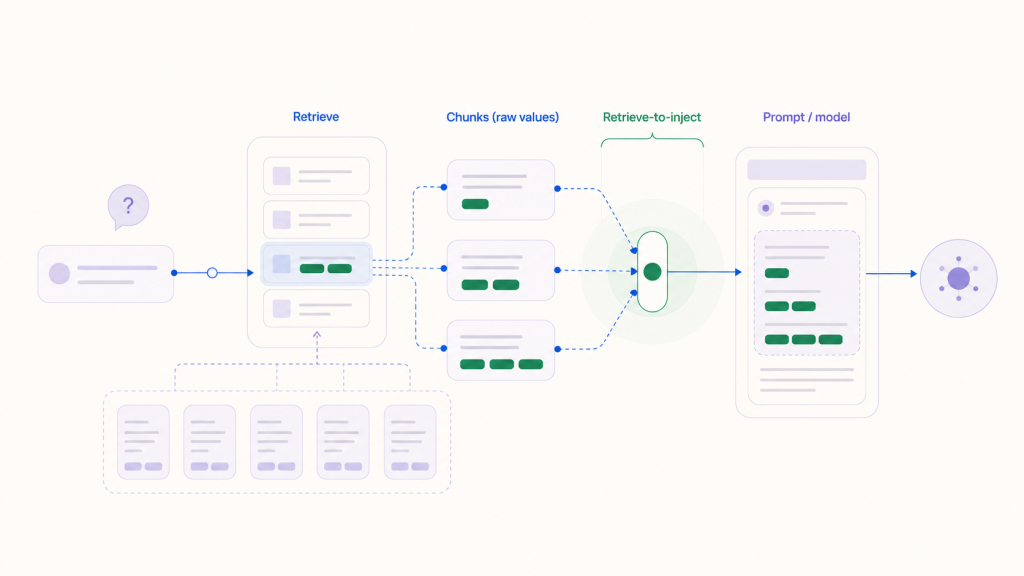
A team builds a retrieval assistant over its internal knowledge base, and it works beautifully in the demo. Then security asks a plain question: when a user query pulls three chunks from the contract repository and the HR folder, where do those chunks go? The honest answer is that they get pasted into the prompt and sent to the model in full, every time.
Most people treat retrieval as the safe part of the stack and reserve their worry for the model. That instinct is backwards. Retrieval is exactly where confidential text gets staged to leave the building. The leak does not live in the vector database, and it does not live in the embedding. It lives in the join, the moment the retriever stitches relevant passages into the context window next to the user’s question.
Whatever lands in that window is what the model receives. If the source documents hold salaries, customer names, or contract terms, the raw values travel with the request. Retrieval did its job well, and that is precisely the problem: the more relevant a chunk is, the more sensitive it usually is, because the answer lives in the specific clause, not the boilerplate around it.
Why filtering at retrieval time breaks the assistant
The common first fix is to filter at retrieval time and drop any document above a sensitivity label. This guts the assistant. The contract repository was the reason to build the thing in the first place, so excluding it leaves you with a system that answers everything except the questions people actually asked.
Redaction after retrieval fails differently. If you strip the values out of a chunk before it reaches the model, you also strip the meaning: a clause with the numbers blacked out no longer supports a real answer, and the model either guesses or refuses. Plain masking treats the sensitive value as noise to remove, yet in a RAG workflow that value is often the signal.
Closing the retrieve-to-inject boundary
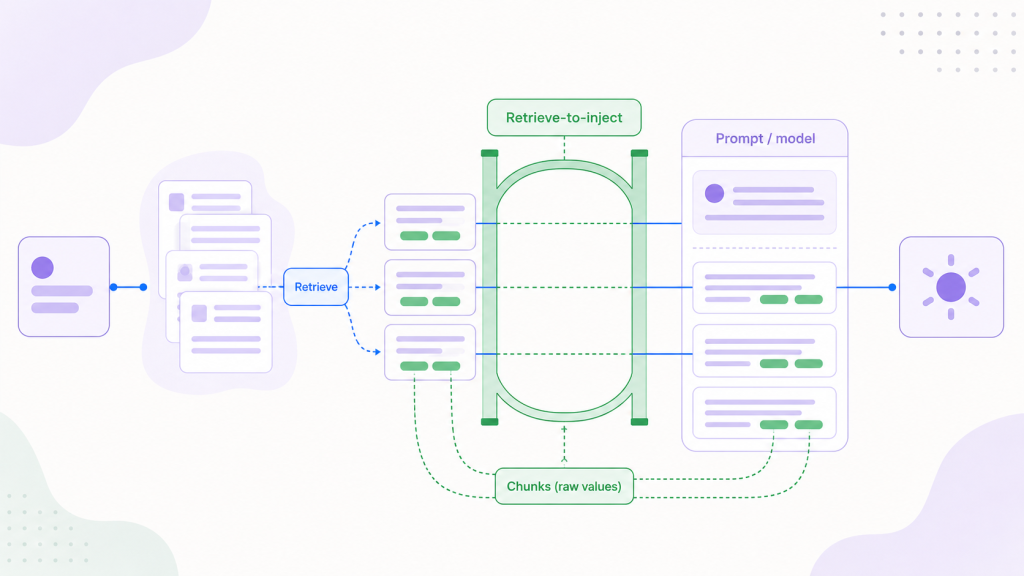
The better move is to treat the moment between retrieval and injection as a boundary rather than a passthrough. The retrieved chunks are real and relevant, so you keep them. What the model needs from them is their structure and the relationships between facts, not the literal sensitive values.
So the chunks are substituted before they enter the prompt. Names, figures, and identifiers are replaced with consistent stand-ins while the surrounding language and the links between facts stay intact. The model then executes over a coherent passage; it does not see the raw value. When the model returns an answer keyed to those stand-ins, the answer is reconstructed against the original values inside your environment, so the user sees a real, complete response. In CUBIG’s case, this substitute, execute, and reconstruct pattern is handled by LLM Capsule, which lets AI work with operational data that can’t be sent as raw data, using context-preserving substitution applied at the retrieve-to-inject step.
The retrieval step itself does not change. The window that used to carry confidential text now carries a structure-preserving version of it, and the confidential business context stays inside your perimeter instead of crossing it with the request.
A quick self-diagnostic for your RAG workflow
Run this test against your own pipeline before you assume the retrieval step is safe:
- Can you name every repository your retriever is allowed to reach, and would you be comfortable if a chunk from each one appeared verbatim in an external model log?
- When a chunk is injected, does the raw text of that chunk leave your environment, or a substituted version of it?
- If you removed your most sensitive sources from retrieval, would the assistant still answer the questions it was built for?
- When the model returns an answer, is it reconstructed against real values inside your perimeter, or does the real value only ever exist outside?
- Can you show an auditor exactly what crossed the boundary for a given query, without reconstructing it from memory?
If any of those answers make you hesitate, the retrieve-to-inject boundary in your workflow is open.
Where it fits in CUBIG’s operating layer
Retrieved-context leakage is one shape of a broader issue we cover in LLM data egress: sending data to a model is itself a boundary crossing, so the question is what form the data takes when it crosses. The agentic version of the same leak, where a tool result rather than a retrieved chunk carries the values out, is covered in agent tool-output leakage. Closing this boundary is what makes RAG usable under sensitive AI workflow enablement.
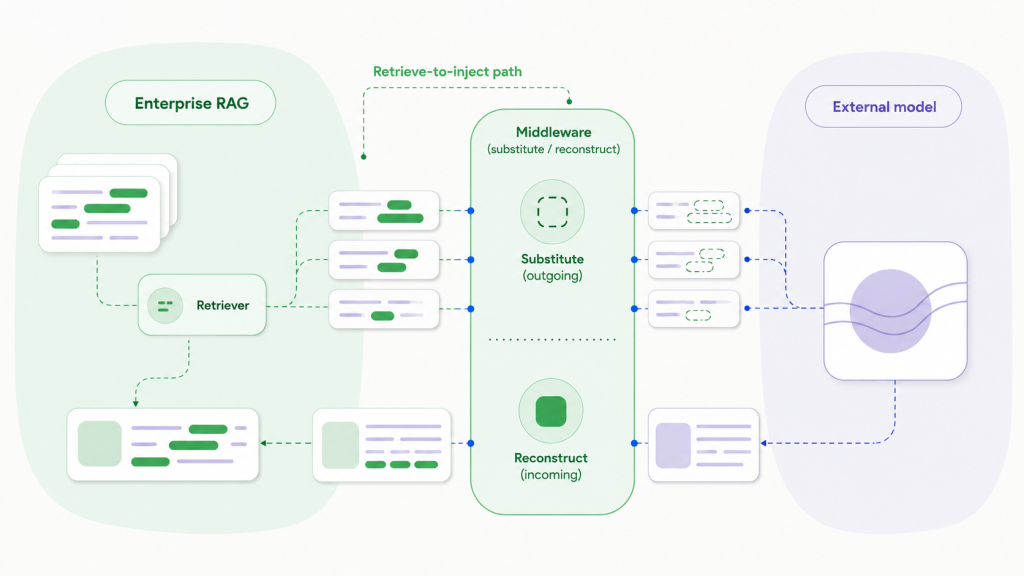
LLM Capsule is designed to close this gap at the retrieval step. Passages are substituted before they reach the approved model, so the context your pipeline sends is a substituted working version rather than raw confidential values.