Hello, this is CUBIG, the company behind Syntitan, the AI-ready data platform for enterprise AI. 💎
In 2026, one synthetic panel predicted choices in a new-beverage conjoint test with 92% accuracy. The result sounds decisive. Its scope is narrower. Boston Consulting Group describes fine-tuning over time, warns about stale training data, and says synthetic panels cannot replace traditional research in its article “Want Consumer Insights Faster? AI Can Help”.
Synthetic consumers can help research teams screen ideas and test assumptions sooner. Yet a lifelike answer doesn't prove that the underlying evidence matches the audience, category, or decision. Teams need to examine the data behind the respondent, the validation method, and the exact conditions behind each run. That is part of what makes data AI-ready.
Key Takeaways
- BCG's 2026 “Want Consumer Insights Faster? AI Can Help” reported 92% accuracy in one scoped beverage conjoint test.
- Research-grade output needs current grounding data, calibration, and validation.
- A fixed data state makes results easier to trace, compare, and reproduce.
What Are Synthetic Respondents?
Synthetic respondents are simulated research participants designed to answer questions or complete research tasks. The term often overlaps with synthetic consumers, panels, users, and personas. Those labels describe different methods, so teams should define the unit of analysis before they compare results.
In 2026, Qualtrics separated four concepts in “Synthetic Data for Market Research FAQ”: personas, respondent-level data, digital twins, and simulated conversations. A persona can support exploration. Structured survey analysis needs respondent-level outputs with enough detail for quantitative work.
In 2025, Gu, Chandrasegaran, and Lloyd defined a synthetic user as a persona representation informed by traditional data and augmented by synthetic data. Their peer-reviewed paper, “Synthetic users: insights from designers' interactions with persona-based chatbots”, studied design interactions rather than market prediction. The distinction matters when teams choose evidence for a business decision.
The 92% Result Has a Narrow Scope
In 2026, BCG's “Want Consumer Insights Faster? AI Can Help” reported 92% accuracy for one new-beverage conjoint test after fine-tuning the synthetic panel. The test supports a focused claim: synthetic methods can produce useful predictions under defined conditions. It does not establish a benchmark across products, segments, models, or research methods.
BCG identifies early concept screening, attribute selection, pricing, and promotion as promising uses. The same article says synthetic panels struggle with product ideas that lack historical analogs. It also keeps human research in the process.
A research leader should ask which data, calibration, benchmark, and run conditions produced the reported accuracy. Another team should be able to identify each one. A number becomes decision evidence after the team can explain its scope.
Why Do Synthetic Respondents Still Need Validation?
NielsenIQ warns that convincing output can still be wrong. In “The rise of synthetic respondents in market research”, NIQ ties strong methods to real human consumer data, recent granular inputs, calibration, and validation.
Large language models can produce coherent answers from weak context. Category shifts, minority preferences, and stale behavior data can remain hidden behind fluent prose. Confirmation bias adds another risk when a team accepts a simulated answer because it fits an existing plan.
A synthetic panel should face the same challenge as any research instrument: show where the inputs came from, test the outputs against observed evidence, and state the limits. Human research still supplies benchmarks and discovers behavior that historical records cannot predict.
Which Five Controls Make a Synthetic Panel Trustworthy?
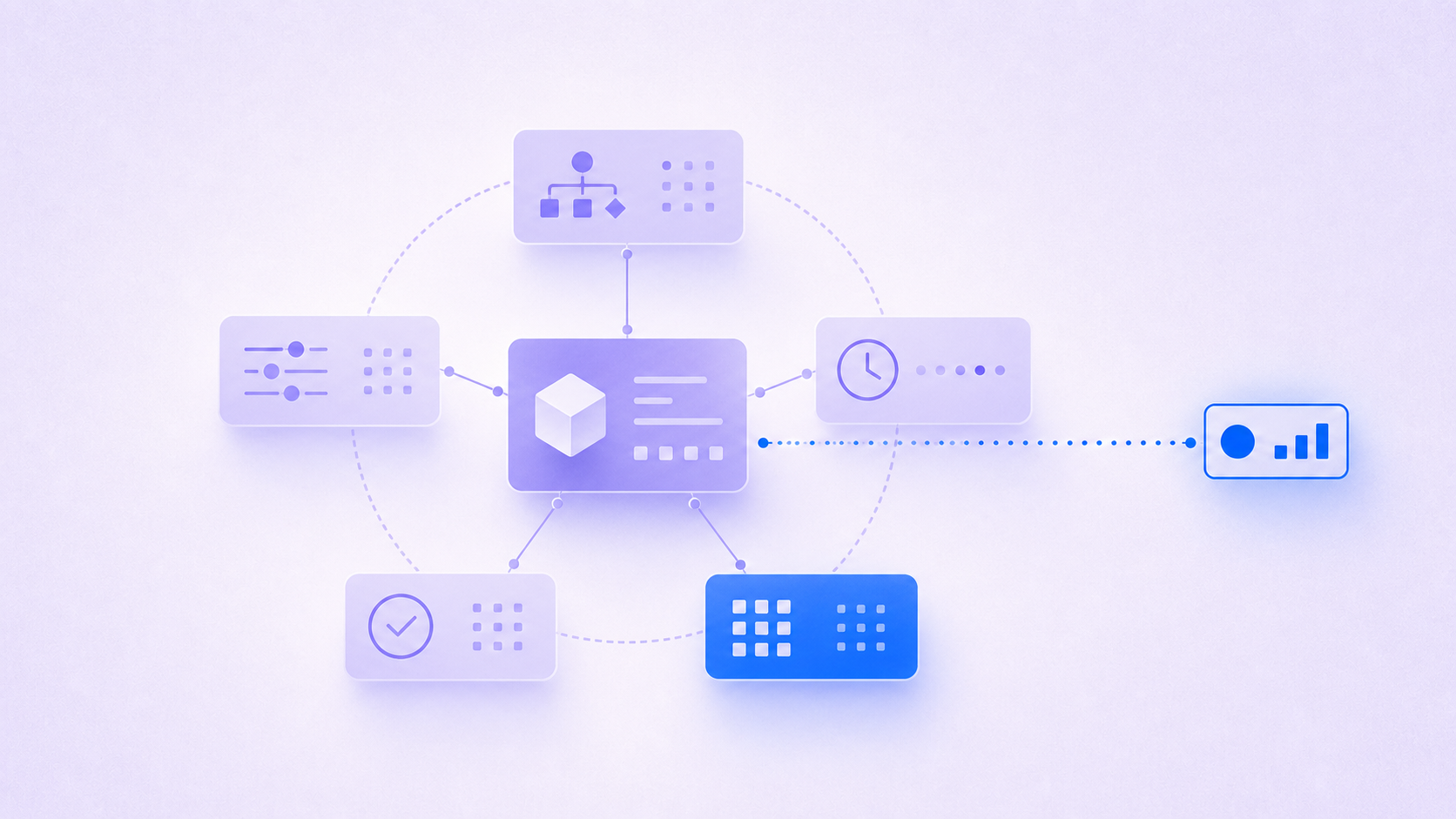
Research teams need five controls before they use synthetic respondents for decisions. BCG, NIQ, and Qualtrics converge on the first four. CUBIG adds the fifth as an operational requirement for repeatable AI work.
- Relevant grounding data. Use human, behavioral, or research data that matches the audience and decision.
- Quality and semantic context. Preserve definitions, category meaning, and provenance so the model doesn't confuse similar fields.
- Recency and change monitoring. Detect when consumer behavior or source data moves beyond the panel's calibration window.
- Validation against real benchmarks. Compare simulated responses with observed choices, surveys, or experiments.
- A fixed run state. Record the released data state, model context, calibration, and validation conditions behind the result.
The fifth control turns validation from a one-time score into an operating practice. When a result changes, the team can compare the input states before it debates the model. That shortens investigation and protects the research record from undocumented data drift.
Why Should the Data State Be Part of the Research Record?
A defensible research record should bind each panel run to a fixed data state. Model name and prompt history cannot explain a changed result when records, schemas, permissions, or meanings changed between runs.
The operational chain is straightforward:
grounding data -> calibration -> released data state -> panel run -> result
Each result should point back to that chain. A comparison should show which records or definitions changed. A reproduction step should restore the same approved state before a team reruns the workflow. This is CUBIG's operational interpretation of the evidence, not a claim that the industry has adopted one standard.
This control also explains why AI results change when the data state changes. It gives research and data teams a shared record for investigating drift.
Where Does Syntitan Fit?
As of 2026, CUBIG's “Syntitan: AI-Ready Data Platform for Enterprise AI” describes six readiness axes, Release State, Run Binding, Diff, and Reproduce. These mechanics let teams score data, fix a data state, bind an AI run to that release, compare releases, and rerun work from the recorded state.
Those mechanics address the operational record beneath a synthetic panel. They do not replace human research, generate synthetic respondents, or prove an accuracy increase. They help a team identify which approved data state an AI workflow used and compare that state when results change.
For market research, the role is narrow and useful. Keep the research method, panel design, and validation benchmark in their proper systems. Use the data platform to make the underlying state traceable and repeatable.
Before You Trust a Synthetic Panel
Synthetic respondents can speed early research when teams keep their claims within the tested scope. Ask five questions before a result reaches a decision meeting:
- Can you name the human, behavioral, or research data that grounds the panel?
- Does that data match the audience, category, and decision?
- Which observed benchmark validates the result?
- Can you identify the released data state behind the run?
- Can your team compare that state and reproduce the result?
Trust comes from relevant grounding data, explicit validation, and a record that explains what changed between runs.
The next proof should start with one workflow and one decision. Run a sample proof on the data behind one AI workflow.