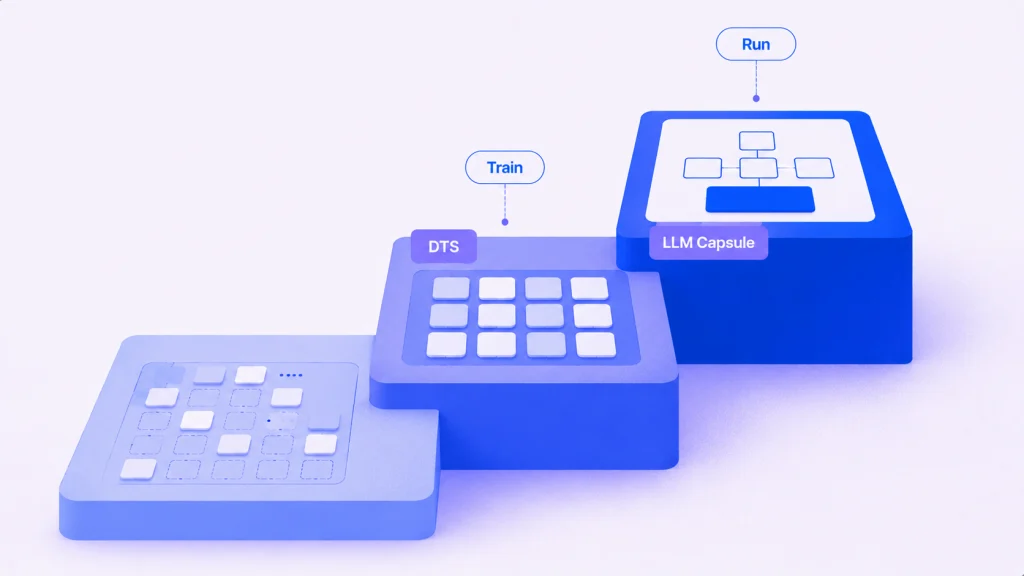
If you came looking for synthetic data, the real question is whether your problem is a training dataset you cannot use or a live workflow you cannot run on confidential data, because the first calls for synthetic data and the second calls for LLM Capsule.
Plenty of teams arrive asking for synthetic data when what they actually need sits one step away. The phrase has become shorthand for “let us use our sensitive data with AI,” which covers two different privacy-preserving machine learning problems that need different tools. Getting the diagnosis right saves a quarter of building the wrong thing. The obvious shortcut, training directly on the raw records, has a documented failure mode: Carlini et al. showed that training-data extraction attacks recover verbatim sequences from LLMs, including names, phone numbers, and email addresses, and that larger models are more vulnerable.
What synthetic data actually solves
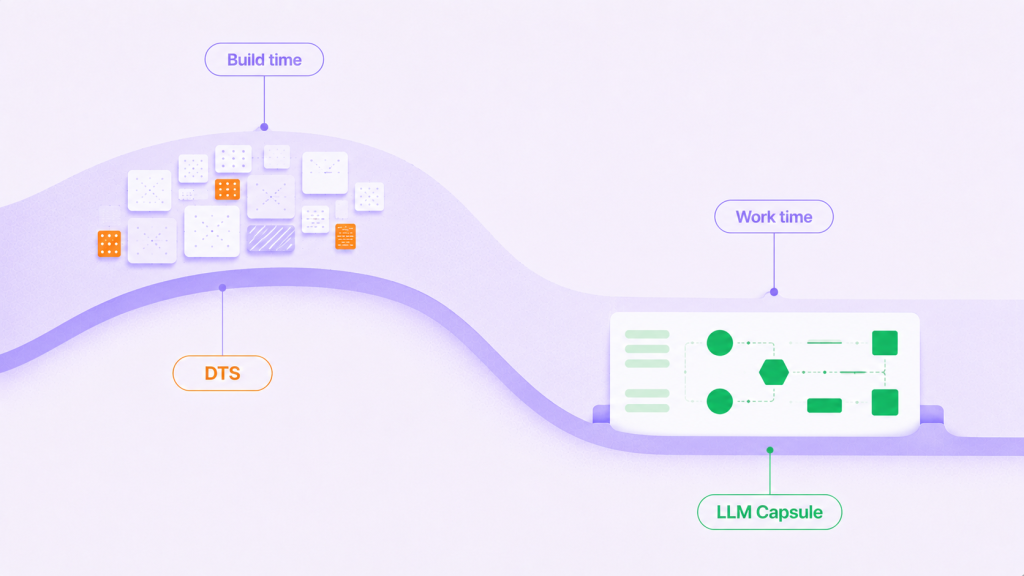
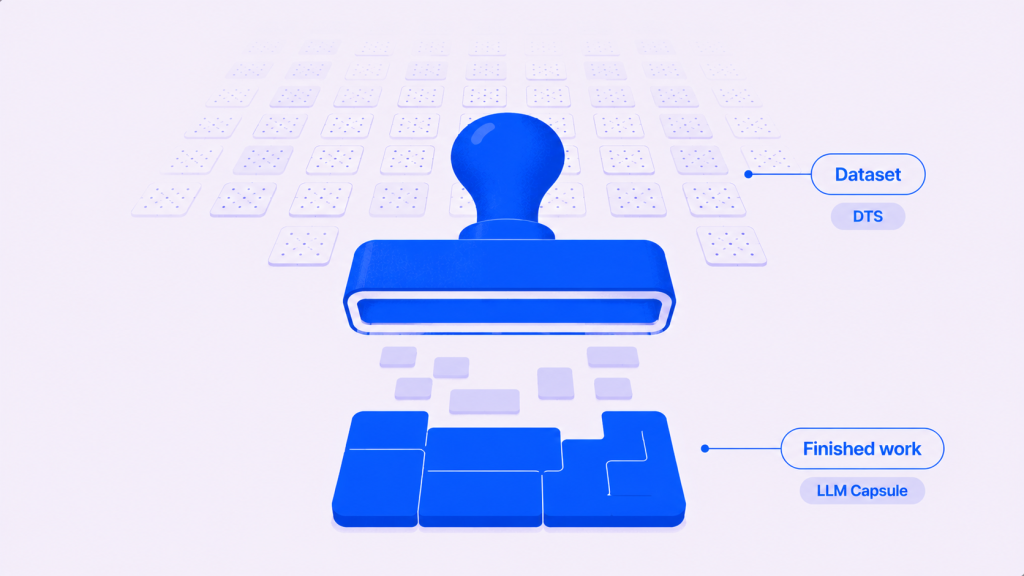
Synthetic data solves a training problem. You have a dataset that is too sensitive, too imbalanced, or too scarce to train or share, so you synthesize a version a model can learn on. At CUBIG, this is the job of DTS, which diagnoses the dataset, then synthesizes the cases and conditions the task needs with structure-preserving synthesis so the statistics that matter survive. The output is a dataset. You take it into your training pipeline and build a model.
If your blocker is at model-building time- that a training set cannot leave a boundary, or a rare class is too thin to learn- synthetic data is the right answer, and you can stop reading here.
What LLM Capsule solves
LLM Capsule solves a workflow problem. Your model already exists, often a frontier LLM or an agent, and the blocker is at runtime: the documents, records, and context you need the model to act on are confidential and cannot be sent to it. Here you are not building a training set; you are trying to complete a task today on live sensitive data. That exposure is common in practice: employees paste confidential data into public chatbots, from source code to client records.
LLM Capsule lets AI work with operational data that can’t be sent as raw data, using context-preserving substitution. Inside your controlled environment, sensitive values are detected and replaced with context-preserving substitutes, only the substituted working version goes to the approved AI, and the response is connected back to the real business values through your internal mapping before it returns to your system. This is sensitive AI workflow enablement, and it is a different mechanism from synthesizing a dataset.
Privacy-preserving machine learning: when you need both
The two are not rivals, and some teams need each for a different stage. You might synthesize a training dataset to get a model that performs, then use LLM Capsule to run that model on live confidential documents in production. One tool prepares the data a model learns from; the other controls the context a model acts on. They meet in the same goal of privacy-preserving machine learning: getting value from data you could not previously put in front of AI. The cost of skipping the workflow stage is on record: Samsung temporarily banned generative AI tools on company devices in 2023 after employees leaked sensitive internal data to ChatGPT.
A quick self-diagnosis
Answer these about the problem in front of you right now:
- Are you trying to build or improve a model, or to complete a task with a model you already have?
- Is the sensitive data a training set, or the live input to a workflow?
- Do you want a dataset back, or a finished document back?
- Is the pain that a class is too rare, or that confidential context cannot reach the model?
Lean toward the first answer, and you want synthetic data. Lean toward the second and you want LLM Capsule. If both describe you, you have a training stage and a workflow stage, and you will use each in turn.
Where this fits in the CUBIG stack
DTS and LLM Capsule are both CUBIG products, which is why the decision is a fork rather than a wall. If your problem is training data, start with what DTS is and how structure-preserving synthesis produces a usable dataset. If your problem is a live workflow, start with sensitive AI workflow enablement. Diagnosing which one you need is the whole point of asking the question before you build.
If you arrived from the other direction, having come for LLM Capsule and wondering whether you also need synthetic data, the mirror-image guide I came for LLM Capsule, do I need DTS? walks the same fork from that starting point.
Try it on your data for free. Run a sample proof and see it on your own workflow.