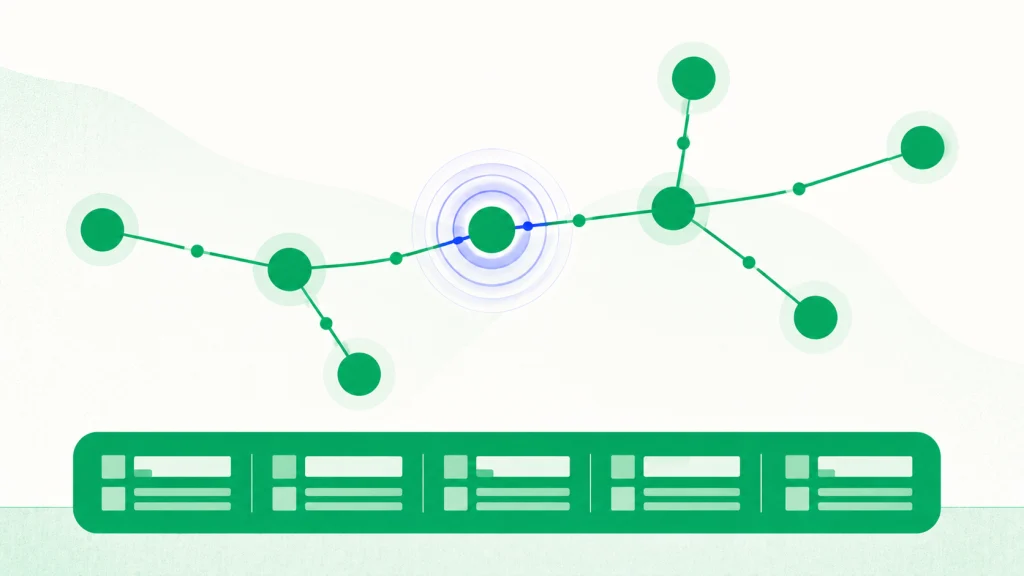
Running AI on telecom NOC data means letting AI root cause analysis correlate live network topology and subscriber records to speed up incident triage, while both of those confidential inputs stay inside the operator’s environment.
A carrier network sits closer to operational technology than to ordinary IT; the terrain NIST maps in SP 800-82 Rev. 3, its guide to securing OT, is written for systems where performance, reliability, and safety constraints come first. In a telecom network operations center, the blocker is often not model quality. It is that the two most useful inputs, the topology and the subscriber records, are exactly the two the operator cannot send outside. So the work that a model could do at 2 a.m. gets done by a tired engineer instead, while the outage keeps running.
Why the NOC is a hard case
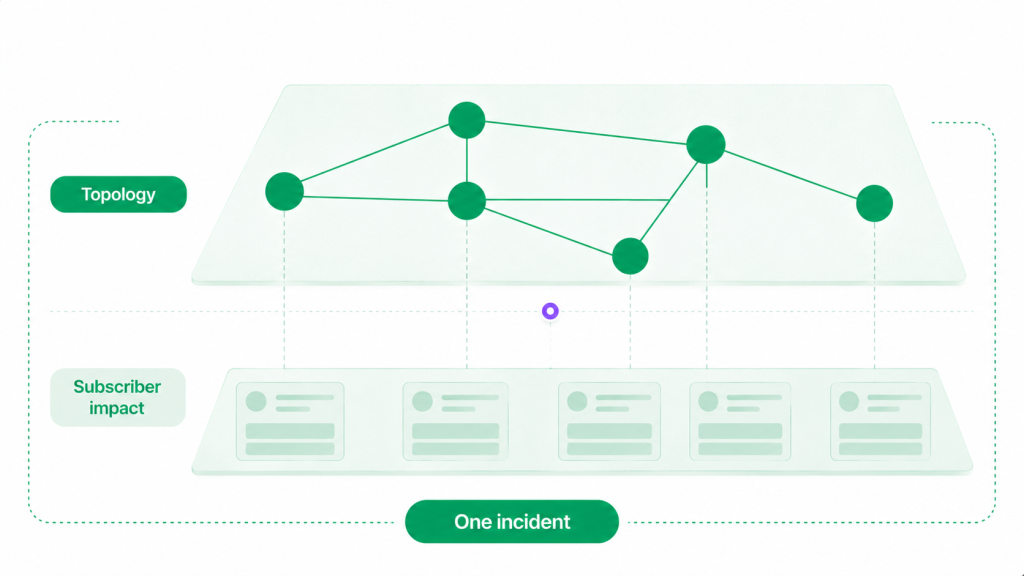
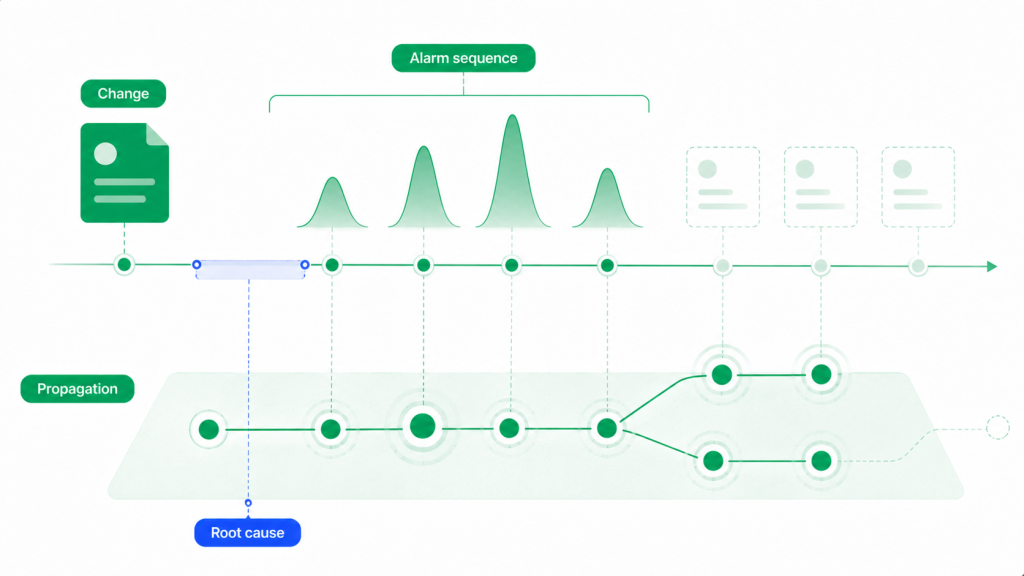
Picture a regional outage spreading across a dozen nodes. The on-call engineer has alarms firing in some order, a topology map showing how those nodes connect, a handful of recent change tickets, and a stream of affected-subscriber records. A model could correlate the alarms against the recent changes and propose a likely root cause faster than a person working by hand.
Two kinds of confidential data sit inside that one incident. The subscriber records are personal data the operator is legally bound to protect. The network topology is operator-sensitive infrastructure that both competitors and attackers would value. Neither is cleared to leave for an external model, so the correlation stalls.
Why anonymizing the incident stalls too
The obvious workaround is to scrub the incident and send the anonymized version. In a NOC that breaks fast, because the relationships are the diagnosis. Which node connects to which, the order in which alarms fired, which change ticket preceded the failure: strip those specifics and the model can no longer trace cause and effect through the network. The topology is not context around the problem. It is the problem.
The other common answer is to keep everything inside and forbid the external model, which is where many operators sit today. That leaves the engineer to correlate by hand while the clock runs, and it also caps what a NOC can do with the strong general models that live outside the operator. Both routes rest on the same assumption, that the sensitive identifiers and the structure of the incident cannot be separated. In a network, where structure carries almost all of the meaning, that assumption is the thing worth challenging, because if you can hand a model the shape of the incident while the real values stay home, the tradeoff between speed and confidentiality mostly disappears.
How AI on telecom NOC data actually runs
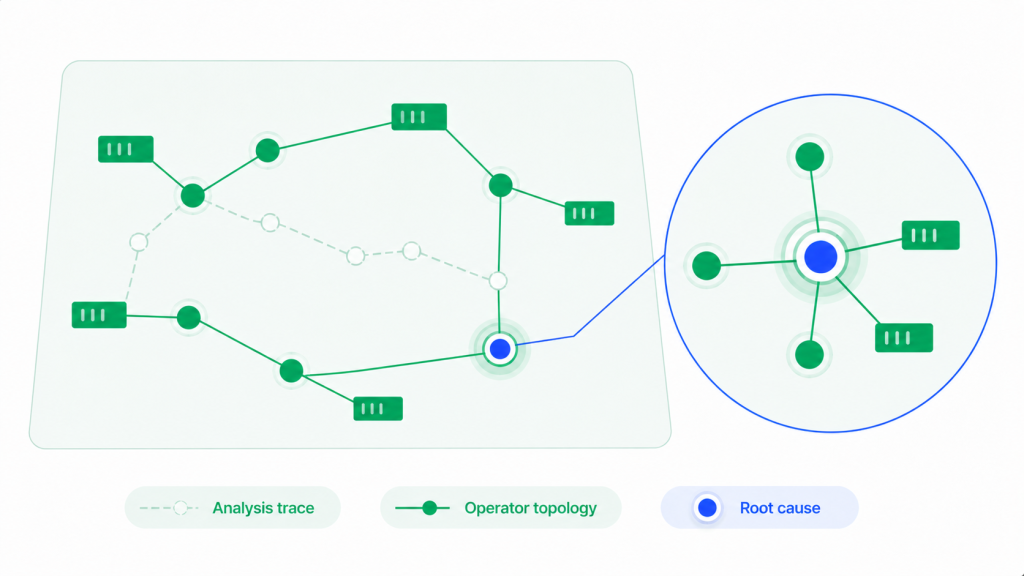
The enablement pattern is Substitute, Execute, Reconstruct. You send the model the structure of the incident, not the raw records and the literal topology. The connectivity graph keeps its shape, so the model can still reason over how a fault propagates, while node identifiers, subscriber details, and the specifics that reveal the real network are swapped for consistent stand-ins. The alarm and change sequence stays in order.
The model correlates against a faithful structure and proposes a root cause: it might flag the change ticket that preceded the first alarm, or the node whose failure best explains the pattern of downstream symptoms. That proposal is reconstructed inside the operator’s environment, where the real node and subscriber identities return, and the engineer reads an analysis that points at actual equipment. The triage ran. The subscriber data and the topology stayed inside the operator’s environment.
In CUBIG’s case, LLM Capsule runs this flow: it lets AI work with operational data that can’t be sent as raw data, using context-preserving substitution, and connects the response back to the real values inside the operator’s environment. Preserving the graph rather than flattening it is what lets the model reason about propagation at all; an internal mapping keeps the link between stand-ins and real identities inside the operator’s boundary, so reconstruction happens locally rather than at the model.
What crosses the boundary, and what does not
| Incident element | Sent to the model? | How it is handled |
|---|---|---|
| Connectivity graph shape | Yes | Structure preserved so propagation can be reasoned about |
| Real node identifiers | No | Consistent stand-ins; real values held in an internal mapping inside the operator |
| Subscriber records | No | Substituted before egress, restored locally on reconstruction |
| Alarm and change sequence | Yes | Order kept intact so cause and effect stay traceable |
| Root-cause analysis | Returned | Reconstructed inside the operator with real identities |
A quick test for your own NOC
Run this check against an incident-response workflow you would like a model to help with:
- Would the incident contain subscriber records, and are you bound to keep them inside?
- Does the diagnosis depend on the topology, the connection order, or the change sequence?
- If you anonymized the incident, would the model lose the relationships it needs to reason?
- Can your reconstruction step return real node and subscriber identities inside your environment?
- Does the workflow close, meaning the engineer gets an analysis pointing at actual equipment?
If most of these are yes, the barrier is data movement, not model capability, and enablement is the pattern that fits.
Where it fits
This is the telecom view of sensitive AI workflow enablement. The same logic carries into other regulated operations. In the public sector the protected file is a citizen case file rather than a network incident, and the method holds: send structure, restore values locally. The concern that a retrieved record or a tool result quietly carries raw identifiers out is the same risk described in agent tool-output leakage.
Because subscriber data and topology stay inside the boundary, the team has a clearer basis for reviewing the workflow against the telecom confidentiality and personal-data duties an operator already carries. The direction also matches what security agencies now expect: NSA and CISA, with their Five Eyes partners, published joint guidance on deploying AI systems securely, centered on the confidentiality, integrity, and availability of AI systems and their data in sensitive environments. Security and compliance get a basis to approve, but that is the by-product. The point was to shorten the outage.
LLM Capsule is how CUBIG helps NOC teams run AI root cause analysis while subscriber and topology data stay inside the operator’s environment. The network structure reaches the model as stand-ins while the real identifiers stay inside your environment.